Fifteen minutes (or so) of fame?

I have been invited (via Facebook) to go on Ipswich Community Radio where the Wednesday breakfast show presenter Nel VanHel would like to do a feature on moths and mothing. I can see from her profile and some of the posts that she is genuinely interested in moths so my expectation is that it would not be the usual media “moths eating clothes” garbage.
The point is I am unable to accept the invitation because a) I am caring for Mum and b) I am shy and retiring. Is there anyone from the SMG who would like to step in for me and speak for our Suffolk moths?
Thanks, Paul

Posted in Events, Help | 5 Comments

Box Tree moth arrives at IGC.

I trapped a typical form Box Tree moth Cydalima perspectalis last night (7th September) in my garden MV. My first site record of this species and I’m sure it won’t be the last going on the sightings of this moth in London for example that I’ve seen on the web recently.
I know that Matthew has taken this moth at Bawdsey both last year and this year and I was wondering if there have been any other sightings in Suffolk by other recorders. I believe Tony is planning to write an article on this moth for the Butterfly conservation local branch newsletter so any other records will be important to report.
This blog is also going out as a warning to watch out for the moth, especially in the Ipswich area as there will be plenty of foodplant for it in the urban landscape. Coincidentally I do have a small Box bush in my mixed hedge, did it draw the moth in?

Neil

The IGC Box tree moth

The IGC Box tree moth

Posted in Sightings | 2 Comments

Suffolk Moth Group meeting 2nd September – Tunstall common.

5 moth-ers attended this meeting, the last ‘official’ evening event for the year. Conditions didn’t look too promising, with some heavy showers in the afternoon followed by clear skies for the evening. 4 traps (1 actinic) were put out around the more scrubby areas on the common as putting them out in the open on a cold night would have been a waste of time.
A few moths trickled in but it was never going to be a busy night so we only gave it a few hours. To keep ourselves busy during quiet spells we looked round for a few larvae and leaf mines. This boosted the species list from 26sp seen at light up to 44sp.
Highlights included, light trap records first: Lunar yellow underwing (2, no surprise really as this is one of the best sites in the Sandlings for the moth), Feathered gothic, Hedge rustic, Birch mocha and a Latticed heath.
Leaf mines/larvae of note: Festoon (a number of larvae found on Oak tree next to the sheet light), Mother shipton (larva on grass), Caloptilia populetorum (mine on Birch), Bucculatrix demariella (mine on Birch) and Coleophora kuehnella (case on Oak).
So this meeting completed the evening events programme and in my opinion this has been one of the best field seasons for a long time with almost every session producing good numbers of moths and/or things of note. Once all the data is entered it will be interesting to see how it compares to 2006, the last great moth year.

Neil

Birch mocha

Birch mocha

Posted in Events, Field meetings | Comments Off

Late August Hollesley

Just catching at home during this period and with moth numbers relatively low though there are immigrants around. Shall probably branch out a little locally to try and capture the Butterbur that is in flight now.

Setaceous Hebrew Character seems to have taken its place as the most abundant moth species recently replacing a short lived peak of Turnip. As others have reported the Latticed Heath has been common as too has the Brimstone here. Also been catching a few Small Dusty Wave at light as I did last autumn. A moth that is often thought not to come to light does seem to do so during late summer/autumn. Also taken 2 Old Ladys at light too. Some interest in second brood emergence of Chrysoteuchia culmella, Heart and Dart, White Ermine and Buff Ermine. Cypress Pug turns up in low numbers regularly and Ancylosis oblitella is still going strong with another Pyrale , Nyctegretis lineana as a first for me. Three specimens caught so far. It has been a very good year for this family for me.

Immigrants have been regulars in this period. Short of listing them, I have not taken anything exceptional, but in common with others the Scarce Bordered Straw has been particularly common, very few Plutella xylostella and only one Vestal so far but also one Evergestis limbata that I put down as an immigrant individual. The reason being that I saw a local second brood some considerable time back.

Late August Blog 2017

Posted in Sightings | Comments Off

Tunstall Common this weekend.

This weekend’s meeting, the last ‘official’ Suffolk group evening event this year will take place on Saturday night – showers forecast Friday late afternoon hence why not that night. Meeting time is 7.30pm. Can’t see that it will be a late finish at this time of year.
Hope to see some of you there.

Neil

Posted in Events, Field meetings | Comments Off

Woolpit ‘VisMig’

To coin a birding phrase, last nights seemingly unpromising clear skies delivered a classic migrant moth in the form of a single Scarce Bordered Straw. It has been eleven years since this species last graced the garden trap – in the classic autumn of 2006 when I took six individuals between 11 Sept and 21 Oct. Otherwise, things have been pretty mundane with just two sightings of Rush Veneer, the odd Latticed Heath and a Hummingbird Hawk seen briefly nectaring in the garden on the evening of 23 Aug. As others may have reported elsewhere, Square-spot and Flounced Rustic are thin on the ground, while Set’ Hebrew Character seems to be doing quite well.

Posted in Sightings | 1 Comment

IGC August – summer ends all too quick.

August has primarily been a disappointing month at IGC for moths. The start of the month saw a massive decline in catches due to poor weather. On top of this some work and family commitments reduced trapping opportunities. Moth numbers improved later from 20th onwards, with a very big catch of moths of 117sp on the 21st, a very high total for the time of year here. Interest has been limited though, with fewer scarce species recorded and hardly any migrants. What has been good has been the strong second brood showing of some moths, including Light emerald (150+ on the 21st for example), Brimstone, both peacock species and the prominents (especially Maple). Be interesting to see if others have noticed this too. All down to the better weather earlier in the summer.
Macros to comment on included the following. Sandhill rustic (second site record on the 14th), Square-spotted clay (17th), Leopard (a late record on 23rd), Tree-lichen beauty (numbers still increasing year on year), Latticed heath (seen most nights later in the month with a high of 25 on the 17th), Yellow-legged clearwing (female found in polytunnel on the 18th, the 5th record at least this year), Satin wave (good numbers of second brood), Dusky thorn (a few), Vestal (7th, 21st and one seen by day on the 14th). Common wainscot has been around in better numbers this year, it’s best season for some while.
The micros have been of more interest during the month. Best record was Cochylis molliculana on the 16th, the only new site record for the site, a long expected arrival of this quite common species on the coast. Was always going to take some time to arrive at IGC as there are only 2 specimens of the food-plant Bristly ox-tongue on the whole site! Another was caught on the 21st. Others seen: Cydia amplana (7th – 2, 21st – probably local bred specimens rather than migrants), Ypsolopha alpella (14th), Stenolechia gemmella (regular), Anania verbascalis (a late record on the 17th), Nephopterix angustella (20th), Eucosma tripoliana (22nd), Ocnerostoma friesei (22nd) and Ptocheuusa paupella (21st and 28th, the 3rd and 4th site records).
An interesting beetle was found in the traps on the 8th – a Hornet rove beetle. This distinctive large black species normally lives inside Hornet nests and is known to be drawn to moth lights. First time I’ve seen it.

Neil

Latticed heath

Latticed heath

Sandhill rustic

Sandhill rustic

Cochylis molliculana
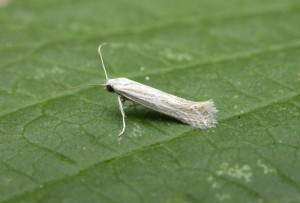
Cochylis molliculana

Ptocheuusa paupella
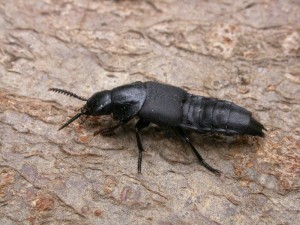
Ptocheuusa paupella

Hornet rove beetle
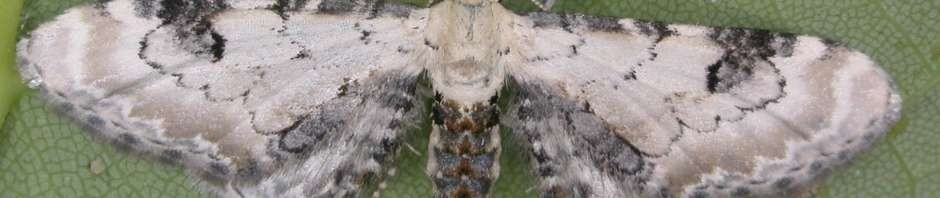
Hornet rove beetle


Posted in Sightings | Comments Off

August in the slow lane…

A very quiet August here near Halesworth. No migrants until the last week or so when things kicked off with a flurry of migrant hawker dragonflies and a couple of painted ladies in the garden, but no hummers or even Silver Ys. Nothing unexpected in the garden MV. Over the last week I’ve had 7 scarce bordered straws, a few rush veneer and dark sword-grass, and yesterday morning (27th) a small mottled willow.

Took the grandchildren down to Southwold beach yesterday and found a cypress pug sitting on the toilet-block window. Not sure how excited I should be about this but I thought I’d share it with you; over the years, toilet blocks (i.e. their lights!) seem to have figured large in my moth-hunting adventures.

Tony H.

Posted in Sightings | 1 Comment

SMG Meeting Hen reedbeds 19th August – a triple WEM-y surprise!

10 moth-ers met up to do some recording at Hen reedbeds, a Suffolk trust reserve. As you would expect the main habitat is reedbed, with areas of wet woodland and more saline habitat close by. 11 traps (5 actinics) were deployed covering both the freshwater reedbed on one side of the road plus the more saline reedbed on the other side. With a heavy shower just before arrival at the site and the temperature dropping prospects were not looking too good for a decent catch.
First species found was a larva of the Starwort, feeding on Sea aster. Reasonable numbers of moths then started to come in, despite the dampness. A check of the traps revealed the same, but it was never going to be a bumper night what with the poor weather for most of August leading up to this meeting.
Highlights amongst the 94 species found included the following. Macros: Saltern ear, Maple prominent, Dotted fan-foot, Oblique carpet (3), Gold spot, Dark spinach (5), Bulrush, Brown-veined, Webb’s and Silky wainscots.
Micros: Monopis monachella (about 6), Eucosma tripoliana and Ancylosis oblitella.

At around 11.30 a few people decided to call it a night and left the more keener moth hunters to carry on. After a short while it was apparent that not much else was coming in so the rest of us decided to pack up just after midnight, going our seperate ways to clear up. This was when the moth of the night was found! Brian had left his 3 bulb WEM light trap running without checking it during the evening. Inside it was a Clifden Nonpareil! All of us present could hardly believe it. This very impressive moth looked huge and flashed its beautifully coloured hindwings while fluttering around the trap. After many photos were taken with phones and cameras the next challenge was to find a pot big enough to put it in! We did have one luckily between us and Brian kindly allowed me to take the moth away to photograph.
So what would have been an OK moth night turned into an exceptional one! Pity the guys who left early missed it, although with the moth certainly resident in parts of the UK now I’m sure there will be other chances for them.

Neil

The Clifden Nonpareil

The Clifden Nonpareil

Dark spinach

Dark spinach

Ancylosis oblitella

Ancylosis oblitella

Posted in Events, Field meetings | 1 Comment

Havergate Island 14th August 2017

I managed to get transport out to Havergate Island on a good night for estuarine moths. It is always a pleasure to be there. In part because the weather will be calm when I request the opportunity and allows me to enjoy the hares and this time also a Chinese Water Deer that are relatively unconcerned by the human presence. The diversity of moth species is not high but the interest is. Species count of 94. In addition to salt-marsh and vegetated shingle the island also has gorse so Pempelia genistella and Epinotia ulicetana were captured. Coleophora albicosta has been captured earlier in the year. Yellow Belle is generally common and amongst the macros on this occasion the Sandhill Rustic was abundant. Also spotted one Flounced Rustic. The Ground Lackey and Rosy Wave were present. Wanderers add to the site list. The catch of micro moths was huge and the catch took some considerable time to sort. Further identification by dissection was also necessary on specimens returned home.

The catch of salt-marsh Scrobipalpa species was excellent and I have photoed the salt-marsh species recorded. Photography is not my speciality so please excuse some of the lack-lustre images. However the Scrobipalpa show the characteristic markings of the species concerned. Perhaps the poorest represented is S. ocellatella where the two ‘eye-spots’ are far clearer earlier in the season. Click on the image to enlarge them. S. acumiatella (not salt-marsh specific) was also captured.

I have also photoed three Clepsis spectrana. This species is common on the island and exceptionally variable. In addition to those photoed it also occurs as a completely unmarked cream colour with some darker shading towards the head rather like Aphelia paleana except that the shading is fuscous. Coleophora species were less diverse than the Scrobipalpa with C. salinella being abundant plus versurella, saxicolella, salicorniae and a single Coleophora aestuariella. This is a second record for Suffolk not a first as I originally posted. Several Lobesia littoralis, a regular, on this occasion. Three Caryocolum species that I have recorded previously were C. marmorea, vicinella and viscariella. Lots of Eucosma lacteana, a few E. obumbratana and one E. tripoliana. Of the cochylids there was Cochylis molliculana, hybridella and atricapitana. Cocylidia implicitana was abundant and Phalonidia affinitana less so but annoyingly I have yet to record Gynnidomorpha vectisana on the island. It should be there. Also photoed is Monopis monachella which is a constant feature on the coast and Endothenia oblongana which is a small tortricid moth that should be recorded more frequently that it appears. The larvae feed on the roots of plantain so there should not be an issue with its distribution on that score.

Being coastal there were also immigrants, Convolvulus Hawk-moth, Silver Y, Nomophila noctuella and Plutella xylostella.

Salt-marsh ScrobipalpaBlogg


Posted in Sightings | Comments Off