Rest harrow invasion.

It appears there is a Rest harrow moth invasion going on in south Suffolk at the moment, with a number of records in the Bawdsey and Felixstowe areas in the last few days. Hopefully Matthew will add to this news as he has a good idea on numbers seen. So watch out in your traps for this moth, could turn up. Whether this means the moth has already colonized south Suffolk or numbers from further south have moved up to maybe begin colonization is not known yet.
Well worth going to coastal localities where the foodplant is present in the daytime as the moth can be easily disturbed. I’ve looked at Shingle street and I know Matthew has looked at Bawdsey without success but there is still plenty more sites to check.

Neil

Addendum: The invasion has reached me, with 2 Rest harrow recorded in last night’s trap (6th). So keep an eye out, they could turn up anywhere.

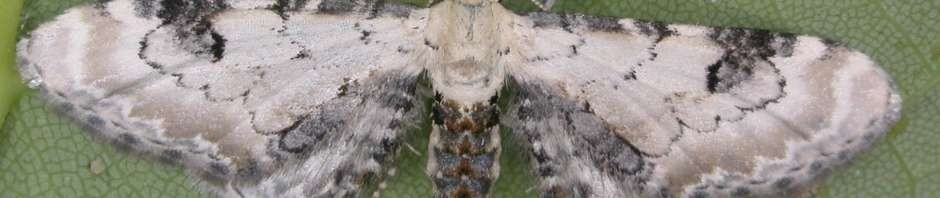
One of my Rest harrows

One of my Rest harrows

Posted in Sightings | 3 Comments

A Clearwing, a Clover, and a complete surprise – News from Woolpit

As others have noted, the prolonged spell of hot, dry weather has been a mixed blessing. My own sense is that the number and variety of moth sp’ visiting the garden trap has also been down on previous years, with some conspicuous by their absence – notably Dark Arches, Common / Smoky Wainscot and the Underwings (pronuba, janthe and fimbriata) … the totals for each of which I could probably count on one hand. I also think that, being in the west of the county, I’m perhaps less prone to the extreme fluctuations in numbers of some commoner immigrant species such as Turnip Moth than those trapping on the coast. Whatever you views, the end of June, the month of July and start of August have turned up some interesting garden records.

I’ve already posted about the Antispila sp’ found on 24 June but think I failed to mention that I also recorded my first garden clearwing sp’ that day when two Red-belted were enticed over from a neighbours apple tree. Sadly, attempts to lure in Yellow-legged and Currant Clearwing went unrewarded so I’ll just have to try again next year. A Platytes alpinella on 1 July was new, with Leopard Moth being another scare visitor. Another presumed breckland wanderer, Sitochroa verticalis, was new on 3 July amongst sixty species recorded. Other highlights that same night were Phoenix, Oak Nycteoline and my one and only Orange Moth of the year. A Prays ruficeps was new the following night, with a second individual noted on the 18th. The first few days of July also saw some quite high numbers (for me) of Common Footman. A Cream-bordered Green-Pea and Marbled Beauty were best of the bunch on 5th, as were Blackneck and Hedya salicella on 7th. It was then routine stuff until 14 July when Leopard and Coronet were noted. The 16th  delivered a superb Marbled Clover. As well as the second ruficeps, the 18th scored with Anarsia innoxiella (the ‘not’ Peach Twig-borer!), my second Fen Wainscot (the first was in 2006, and the third followed a few days later on 20th) and, with thanks to Neil, Epinotia signatana, which was new. In his post Raymond mentions ohridella being abundant just before the weather broke. While used to seeing them on the car in the morning – I park next to a large horse chestnut – they seldom seem to wander the 20 metres or so into the back garden so counts of 40 (20th), 75 (24th) and 30 (26th) were of note. A Phyllonorycter ulmifoliella was picked out amongst the ohridella on 20th and expertly identified by Neil. A Small Ranunculus on 21st was a third for the garden, with Small Phoenix on 23rd only my second garden second. A Dusky Thorn on 18th and Canary-shouldered Thorn on 24th were hints that the season is marching on and autumn isn’t too far away. Metalampra italica has now been seen annually since 2014 and one was found indoors late month.

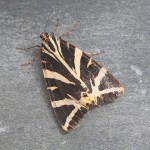
With seemingly regular reports from everywhere else I was hoping I’d pick up my own Oak Processionary but that wasn’t the case. Of other potential additions to the garden list I’ve also been looking out for perspectalis (the Box-tree Moth) but, perhaps, should have been thinking of something a bit more jazzy … so it was somewhat of a surprise to see a superb Jersey Tiger sitting on the top most egg-tray in the trap on Friday morning. This species is still rare in Suffolk with just a few coastal records so, subject to confirmation, mine could be a first for VC26 West Suffolk. What a great way to start a new month!

In other travels, I finally managed to add Sallow Clearwing to my life list when Matthew and I visited Chobham Common on 7 July (after following up a Twitter lead) and, later in the month, I popped down to RSPB Rye Meads to re-acquaint myself with Raspberry Clearwing. A species I’d not seen since July 2009 at the same site.
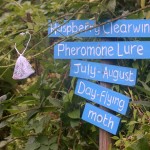
Rye Meads (20 July)
Rye Meads (20 July)

Jersey Tiger (Woolpit) 2- Aug-18
Jersey Tiger (Woolpit) 2- Aug-18


Posted in Sightings | Comments Off

Carlton marshes Suffolk Wildlife Trust reserve 28th July 2018.

10 moth-ers meet up for this meeting (along with the warden later in the night) to survey this excellent wetland trust reserve which has just successfully secured funds for a major expansion. A mixture of actinic and mv traps were spread out around the tracks and dyke edges to try and target White-mantled wainscot, one of which had been seen at the site on a previous survey. It was quite breezy so the most sheltered spots were used, and thankfully the wind did drop later in the night. The sky was fairly clear with a bright moon but it stayed mild.
Moths came to the sheet light at a steady pace and some of the traps at the top end of the reserve did pretty well with large numbers of wainscots caught. The target moth was seen, with one fairly fresh White-mantled coming into the sheet light just before we set off to do the first trap round. No others were found.
At around 2am we decided to pack up as the numbers of new species started to drop off, and the Garden tigers were in, a traditional late flyer!
Other moths of interest seen included, starting with the micros: Apodia bifractella (adult found on Fleabane flower), Monochroa palustrella, Dichomeris alacella, Acleris shepherdana (a few), Scoparia subfusca, Nascia cilialis, Agdistis bennetii, Agonopterix yeatiana, Elachista utonella and Gynnidomorpha alismana (3 probables, need dissection to be certain). Macros: 10 species of wainscots including Southern wainscot (abundant), Small, Webb’s, Bulrush, Brown-veined and Twin-spotted, Gold spot, Double lobed, Ghost moth (a half-sized female), Lesser cream wave, Kent black arches, Crescent, Reed dagger, Flame carpet, Chevron and a Dark sword-grass. Total just over 170 species with a few more to add at a later date, so, given the conditions quite a good night. Certainly my best total at a recording meeting this summer so far.

Neil

Probable Gynnidomorpha alismana

Probable Gynnidomorpha alismana

Chevron

Chevron

Brown-veined wainscot

Brown-veined wainscot

Posted in Events, Field meetings, Sightings | Comments Off

July 2018, Hollesley

The predicted impact of climate change has been evident in the country this year with more extreme weather. Wet/cold spring, hot dry summer and extreme events. The dry spell was dramatically ended here with thunderstorms. The storms which came up from the near continent brought hoards of Turnip and Plutella  xylostella with them and a number of Silver Y. The wind direction change has also allowed Cydia amplana, Udea ferrugalis and Nomophila noctuella to visit my traps. The rain cut down the abundant Pima boisduvaliella (10 to 50 a night). Earlier in the month Platytes alpinella and the Footmans were especially abundant and Cameraria ohridella had a swarm in the days just before the weather break. Other migrants have been relatively scarce here, though I have had a Pigmy Footman and whilst the Dark Crimson Underwing had been reported coming into the country mine was a Light Crimson Underwing on 17th. The frequent migrant, the Dark Swordgrass has been virtually absent so far this year, however I did pick it up at The Patch on 19th, where it is becoming a regular catch. Can anyone tell me of it’s preferred breeding habitat?

Although July mothing was a big improvement on that for June the diversity still seemed low. Three species I have noted it being a good year for are the Engrailed, True Lover’s Knot and Yponomeuta plumbella. It has been poor for the Brimstone and also the Large Yellow Underwing. I have rarely taken more than one Noctua pronuba per trap this year which is something of a blessing.

The Oak Processionary moth has been turning up in Suffolk. I have taken two. I see that the forestry web site for the species still only speaks of it being resident in London and the surrounds. Does anyone know differently on this species?

Despite an overall low diversity I have had some good catches. Yponomeuta  irrorella arrived on 4th to bring my tally of Yponomeuta up to the full 8 species of this genus to be found in the UK. The long awaited Caloptilia  hemidactylella on 23rd and Dark Dagger on 26th were both confirmed. Both were noted to be distinctly different in appearance to their commoner close relatives. On the same night as the Light Crimson turned up I also added a Shore Wainscot and Grass Emerald to my site list. Other species new for my site have been the Common Lutestring (7th), Orange Moth (8th), Monochroa cytisella (11th), Argyrotaenia ljungiana (19th) and the Beautiful Yellow Underwing (to light on 24th).July 1

July 2

Posted in Sightings | Comments Off

Turnip explosion!

Have other recorders noticed good numbers of Turnip moth in their traps of late? I found quite a few in the traps today so counted them – 250 in my 2 lights. Can’t remember seeing that high a number at this site before. Quite a variation in colours and size which again I think is unusual at this site, mine are normally dark coloured.

Also, the underwing species seem very scarce, especially Large yellow. Not that this is a bad thing from the point of view of the other moths in the traps. My guess is they are aestivating during the warm weather. Have others experienced this too?

Neil

Posted in Sightings | Comments Off

Carlton marshes meeting this weekend – going for Saturday night (28th).

Been holding out on choosing a night for this meeting due to the changing weather. It is now looking like it will be safer to trap on Saturday night as there is now the very strong possiblity that there will be thunderstorms Friday evening. We don’t want to be caught out on the marshes in one of those! We all know that conditions just before storms are the very best for moth trapping but putting away soaking wet equipment in the pouring rain is not fun (done it a few times so know from experience).
So see you in the car park at TM508920 at 9pm.

Neil

Posted in Events, Field meetings | Comments Off

Groton wood daytime meeting 21st July 2018.

6 recorders met up for this daytime meeting at Groton wood to look for moths, larvae and leaf mines. It was a hot, dry afternoon so we soon headed into the shady wood where the temperature was much more pleasant. Pity about the mosquitoes however!
Searching around the rides through the wood produced a list of just over 40 species, not too bad given that it is still early for a lot of leaf mines. It was hoped by having this meeting we could obtain some first brood mines to breed adults out of. Unfortunately the warm weather had pushed the season on further than we would have liked as we found most mines had already emerged.
Species of possible note found included: Stigmella aceris (mines on Field maple), Ectoedemia loisella (mines on Field maple keys), Euspilapteryx auroguttella (cones on St John’s wort), Antispila metallella (mine with cut out case hole on Dogwood), Stigmella tiliae (common on the abundant Small-leaved lime in the wood), Heliozella sericiella (cut out case on Oak) and Roeslerstammia erxlebella (early mine in tip of Lime leaf).
I did try a bit of beating for larvae but this was unsuccessful in obtaining any records, and Paul tried using some clearwing pheromones again to no avail.
Overall an enjoyable survey, just a pity that the planned night-time trapping didn’t take place due to other commitments for the 2 keyholders.

Neil

Posted in Events, Field meetings | Comments Off

Belated summer moth news from Purdis heath.

It’s been a long time since I’ve had a chance to write a report on the moths seen at the golf course, simply because I’ve had limited time. Various work, home and other commitments plus a couple of holidays has kept me very busy but a recent slight let-up has given me a bit of time.
This summer so far has been pretty poor for moths in my opinion, with only a few nights with what I would call good catches. With high pressure being dominant this summer, the days have been warm and sunny but the nights have been clear, not good for decent catches especially when the moon starts to get bright. Coupled with the drought affecting flowers and moth food-plants I can’t see things improving and I even think 2019 could be bad as the larvae of next year’s moths have very little to eat!
There have been a few highlights seen here however, including new species. First, I found a Phyllonorycter emberizaepenella on the outside of my kitchen window on 9th May. Not too far away is a large clump of Honeysuckle, the foodplant, so I guess it came from there. Probably an overlooked resident species. Then, on one of the only really good moth nights this summer on the 1st June I found a superb Agrotera nemoralis amongst the hordes of common species. Just slightly worn, was a most welcome record. Coincided with another record away from the breeding areas in the UK so could have been a migrant or dispersive individual. On 1st July found the final new species for the period covered here, an Obscure wainscot. Again, could be a migrant or dispersive individual, following on from Matthew’s sighting in June.
Due to the large period covered I’ll only list a few other interesting observations (there haven’t been many anyway). Dog’s tooth (11th May, less than annual here), Broom-tip (15th May), White colon (3 records in June, all different ones – only 3 previous records in 3 different years so best year ever), Cream-spot tiger (rare here so good to get 2 records), Nemophora fasciella (male found dead in greenhouse in June), Red-belted clearwing (2 to pheromone on 23rd June), Garden dart (28th June), Plain pug (1st July, second site record). Caught a strange form of Heart and Dart too with all the dark scales colourless (see photo). Also has been regular sightings of Evergestis limbata so probably breeding and OK numbers of Shaded fan-foot and Vitula biviella.
With the lack of much moth news (apart from Matthew who always seems to do well compared to the rest of us!) I’m guessing other people have been struggling too.
Hopefully the rest of the summer will buck the recent trend of poor catches and we will get some rain, we are certainly pretty desperate for it now at the site.

Neil

Phyllonorycter emberizaepenella

Phyllonorycter emberizaepenella

Agrotera nemoralis

Agrotera nemoralis

Obscure wainscot

Obscure wainscot

White colon

White colon

Weird Heart & Dart

Weird Heart & Dart


Posted in Sightings | 4 Comments

Recent outings on the Somerleyton Estate

Back on the 5th of July I decided to trap the small but special site of the old Brick-works at Somerleyton. Allan Eaton joined me and I ran just three traps which were all fairly close together. This was the site where I found O. semirubella last year and they came to light very early, and on this occasion the first were in just 8 minutes after switch on. Plenty of moths seen, highlights as last year being the semirubella 6 and G. ochrodactyla ( Tansy Plume) this time around an impressive 3. Perhaps overshadowed by the capture of a Scarce Black Arches, however the former two species much better on the eye. 132 total species. Back home where I ran my fourth trap the outstanding moth for me was a Pristine Black-neck which I have rarely seen ever, and a home first.

Herringfleet Hills 17th July; Brian and I joined by Allan again. I’d promised him 220+ species but for the 2nd time my  target at this site not met, with 195 species recorded and nothing outstanding. Lots of Triple-spotted Clay a site specialIty, and high numbers of P. alpinella. Best moth probably the locally common White-mantled Wainscot with a single recorded.

Posted in Sightings | Comments Off

Groton wood meeting this weekend – an important update.

Unfortunately as the 2 main leaders with keys to the site cannot make the evening meeting regrettably it has been decided to cancel this part of the recording session. The afternoon leaf mine and larval hunt will continue as planned however.

Neil

Posted in Events, Field meetings | Comments Off