Bumper first trapping session of the season

My first moth-trapping session of this season was on the night of 24 March, at one of my regular survey sites near Halesworth. The night was warm and cloudy, with a minimum temperature of around eight degrees – perfect conditions for spring mothing in March.
I was not disappointed as c650 moths were trapped of 20 species. The bulk of the catch consisted of hordes of Common Quaker, Small Quaker and Hebrew Character.
A single Yellow-horned was a welcome ‘first’ for the site as was Lead-coloured Drab (2 individuals trapped).
Other species noted included Acleris notana/ferrugana, Tortricodes alternella, Diurnea fagella, March Moth, Dotted Border, Shoulder-stripe, Oak Beauty, Pale-brindled Beauty (a late example), Twin-spotted Quaker, Clouded Drab and Red Chestnut.
The ‘hibernators’ put in a good showing with many Chestnut and Satellite along with two Grey Shoulder-knot and a single Pale Pinion.

Posted in Sightings | Comments Off

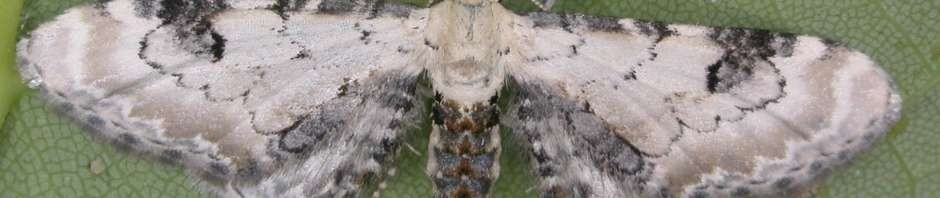
Acleris sp – Any thoughts?

See below photo of the Acleris sp’ taken in the garden on 23 Mar which I thought might be a candidate for schalleriana. Have kept the moth just in case. Any thoughts?

Acleris sp (W) 23Mar18


Posted in Identification Requests, Sightings | 4 Comments

Quiet spring so far at Purdis.

Not much to shout about really in the moth traps I’ve run recently. Still feels a bit on the cool side. Quite often I’ve put a trap on at dusk in seemingly good conditions only for it to rain or the wind to start blowing shortly afterwards!
This was exactly what happened last night, again. Still a few moths came in – 9sp in all. Of minor interest were the 25 Yellow horned present, rest the usual mix of low numbers of Orthosias and Chestnut etc.
I’m guessing by the lack of reports on this blog others are struggling also. With more cool conditions being talked about for the future it’s not looking that promising a start to the year.

Neil

Posted in Sightings | 3 Comments

Indoor Meet

An enjoyable indoor meeting yesterday with some interesting talks covering three local patches and mothing adventures further afield … in Ireland, France and Bulgaria/Greece. Special thanks to Neil for organising the day and for laying on the tea, coffee and cakes. Let’s hope the weather improves soon so we can all enjoy what 2018 has to offer.

Posted in Events, Indoor meetings | 1 Comment

Brief February mild spell brings in some moths to Purdis.

Have run a couple of traps here the last 2 nights in this very brief mild spell, the first time I’ve bothered this month (not been inspiring weather really).
The 18th brought in 10sp and around 100 moths to 2 mvs. Plenty of March moth and Tortricodes alternella making up the bulk of the catch. Best of the rest Acleris cristana (nice black and white form), Small brindled beauty (8), Dotted borders and a Dotted chestnut. No Spring ushers so that seems over here now.
19th, a damp night but still mild brought in 9sp and just over 90 moths, running an mv plus a 20w wem. More of the same really with 9 Small brindled beauty and the first Common quaker of the year the pick of the bunch.
I also went out after dark last night to check an area of sparse acid grassland on the site to see if there were any Lunar yellow underwing larvae about and was rewarded with 14 found in quite a short space of time. This shows my heathland management work here is benefitting the species which I am quite pleased about.

Neil

Acleris cristana

Acleris cristana

Posted in Sightings | Comments Off

Observations From a Grumpy Old Moth-man

Several contributors have described 2017 as ‘a good year’. But I must admit I didn’t find 2017 to be special at all.

My formative years as a moth-hunter were in the ’60s. I remember buying some second-hand books at an AES exhibition around 1965 (titles included ‘Days with a Butterfly Net’ and ‘A Moth-hunter’s Gossip’), which were written in the ’30s and were lamenting the decrease in butterflies and moths that had occurred in the 1900s. When I explored some of the best British sites and habitats in the mid-60s I found many species had declined or disappeared since those books were written – in fact the ‘40s and ’50s were considered black decades for wildlife conservation. Then in 1980 I went to live in Northumberland and when I came back south, to Suffolk in 2005, I was disheartened to see how sparse most moths had become in the meantime: it was something I hadn’t expected. And having exhumed my Suffolk garden records from a decade ago I find the total numbers of moths has decreased again: the best nights in late July/August 2017 are only 60% of what they were in the ‘average’ years of the mid ‘00s.

So, in my mostly ‘anecdotal’ experience, we are now seeing only fractions of fractions of what moths were around a century or so ago (I would hazard an estimate of less than 5%). The decline has been continuous and has accelerated. The future isn’t looking bright.

I must admit, I wasn’t here in June/early July so I missed the best of ’17. I spent those balmy (too hot) weeks in France: I have always thought the ‘typical’ French countryside resembles what Britain was like fifty to a hundred years ago, but French naturalists are quick to point to a similar decline in moth numbers there. There seems to be no way to escape the eco-disaster that may be unfolding.

If I was a teenager now I hope I would be more optimistic. Having spent most of my life in conservation and environmental education I can’t help but think my generation has failed – we have spawned Donald Trump and global warming, and have supported, by proxy, the despoliation and sterilisation of the British countryside. Not to mention the advent of Boris Johnson, Ant and Dec and neonicotinoids. Maybe we don’t deserve any better.

Sorry for this unseemly rant, but it’s probably better out than in. My only moth sighting this past week has been a dotted border at the kitchen window. But it’s a pretty creature and it gave me a lot of pleasure.

Tony H.
Posted in Sightings | 1 Comment

Help Needed – Lunar Yellow Underwing Caterpillar Surveys – King’s Forest Suffolk

I’ve received a request for help from Sharon Hearle  – details below. Tony

Organised at fairly short notice in Feb/March – mild evenings above 3 degrees (hopefully even milder) between 6pm -8pm approx.

I am looking for a few volunteers to help with some survey visits to Kings Forest looking at rotovated plots on forest rides and clearings to see whether lunar yellow underwing is present. This will help to inform Forestry Commission management work and the Shifting Sands Heritage Lottery Project.

Please contact Sharon Hearle on shearle@butterfly-conservation.org Tel 07920131526 if you might be able to help

Posted in Conservation, Field work | Comments Off

Suffolk Moth Group indoor meeting Bucklesham village hall – Saturday 17th March 2018.

Doors will open at 10am for setting up, refreshments and general chat plus looking at exhibits. We can then start with a few talks. Some of the group will then be lunching in a local pub just down the road from 12.30pm onwards. Or you can bring your own food along, the hall can be left open for those doing this. The meeting will continue until we have run out of talks etc, possibly around 4.30-5pm.
The day’s entertainment is entirely dependent on members bringing along items of interest or being prepared to give a short/long talk. A digital projector will be available for those with digital presentations or images. If anyone would like to show ‘old style’ slides hopefully we can arrange a slide projector if needed, please let me know on this. Tables will also be provided for those with exhibits. It would be useful if you are intending on giving a presentation to let me know. I hope to do a demonstration of a moth dissection for those who are interested, a technique that is not as hard as it first appears.

Refreshments  (tea, coffee) will be provided.

If you are doing a Powerpoint presentation then you should save it in OpenOffice format or if you use Microsoft Office then Office 2007 format or earlier.

Bucklesham Village Hall is not far from the Nacton A12/A14 roundabout to the east of Ipswich. From the A12/A14 roundabout take the minor exit after the A12 exit but before the A14 Felixstowe exit. This exit is signposted to Bucklesham and leads via a single track road to Bucklesham Village. At the end of this road you will reach the village, at the T junction turn right into Bucklesham Road. Take the next right turn into Levington Lane and the village hall is a short distance down the lane on the right.

A map of the location can be viewed by following this link. The OS Grid Reference for the hall is TM242417. If you need any more detailed instructions in how to get there then do get in contact with myself.


Hopefully see you there!

Neil

Posted in Events, Indoor meetings | Comments Off

2017-a good year for me at Carlton Colville

2017 was a very good year for my garden here at Carlton Colville with 415 species and 12629 individuals. This was an increase over 2016 of 50 species mainly due to looking closer at the micros with help from Raymond Watson and others in the group for which I am very grateful. I am very surprised at the numbers and species I get with my house being on a modern estate but fortunately only about 1 mile from the coast and close to Carlton marsh which possibly helps.

Posted in Sightings | Comments Off

2017 – a record breaking year here at Purdis. How was it for you?

After all the gloom and doom regarding our moths in 2016 both out in the field and here at my home trapping area 2017 turned out to be completely different. In fact it was a record breaking year for me here with 842 species noted (19 new site records in this total), beating my previous highest by almost 100 species. This is quite a major improvement compared to the species total in 2016 which was 689 species.
I’ll never know for sure why this was but there are a few things that probably helped. There was a cold spell over the winter (in January), something I think is vital for the overwintering stages of moths. There were good warm spells especially in June and early July which always helps with getting better catches. Mild spells in the autumn too, good for migrants and also second generations of earlier summer moths as well as some of the immigrant species that arrived earlier and bred. It wasn’t all good however with September being a month that sticks in the mind as being very poor due to cool weather, meaning that a few regular species didn’t make an appearance here this year – Heath rustic, Bulrush wainscot and Webb’s wainscot being examples.
Having already heard from another Suffolk recorder that it was their second best ever year for species, how was it for others?

Neil

Posted in Sightings | 3 Comments