Targeting White-mantled Wainscot

On Wednesday 7 August, a week after catching a Single White-mantled Wainscot with Brian in Norfolk I decided to seek it out on the Somerleyton Estate. Earlier in the Summer I had checked out the area I wanted to try but on my return it had become far too dangerous to drive back from after trapping due to high reed growth on the track and reed lined ditches either side so I settled for a spot with some dry growing reed far away from the river. The track was dry and high above the marshes so the reed was ideal. Set up at 8.30. Two White-mantled taken by 10pm, job done! The two were both from a trap next to a field of wheat. One of them retained and verified by Neil and Tony at last nights meeting. Most common moth of the night was Fen Wainscot, plenty of Crescent and Reed Dagger seen. An easy nights trapping with little on the wing after 10.30 and a welcome early finish after recent marathon events. Plenty more places to look for this species in the future.

Posted in Sightings | Comments Off

Moth Night Part 2 – Woolpit

Yippee … 2 Ruby Tigers in the trap this morning.  I was also hoping that the Scalloped Hook-tip would reappear but it didn’t, so I had to make do with a Pebble instead. Other moths noted included singles of Hedya salicella, Rush Veneer, Magpie Moth, Lunar-spotted Pinion, a very worn Fern and – pick of the bunch – a Square-spotted Clay. The latter was only the 3rd garden record, it having previously been recorded in 2006 and 2012.

Posted in Sightings | Comments Off

Moth Night Part 1 – Woolpit

Sadly, there were no Tigers in the garden last night, or any other feline creatures come to think of it apart from our neighbours cat … but I did manage just over 50 sp’ to actininc including a Scalloped Hook-tip (a new site record, but sadly esacped before I could pot it up), Evergestis pallidata (2nd garden record), Ypsolopha sequella, Lychnis, Silver-Y (2) and a xlyostella. There was also a little influx (for me) of Yellow-shell and Tawny-speckled Pug with about 5 of each noted. Fingers crossed for a Ruby T at least tonight.

Posted in Sightings | Comments Off

Moth Night 2013

A reminder that Moth Night 2013 commences tonight for three nights.

I hope some of you will be coming to Bawdsey Hall on Saturday. It would be good for as many of us as possible to submit records this year, whether as part of the Bawdsey organised event or just from individual trap sites.

This link takes you to where you can input data:

http://www.mothnight.info/www/

Posted in Sightings | Comments Off

More Footmen

Pigmy Footman at Bawdsey Hall this morning accompanied by a male red-striped Vestal and a male Gem. Also an interesting looking Nycteoline and Pug to take a further look at.

The second Wormwood of the year in the traps yesterday morning.

Posted in Sightings | Comments Off

SMG meeting 3rd August 2013 at Dungeness, Kent – 3 varieties of Chocolate.


This was the first ever Suffolk Moth Group ‘away’ trip where we left the county to try and see some different moths in another part of the country. This year we chose Dungeness in Kent, with its speciality moths on the shingle habitat there.
A few members of the group met in the early afternoon at Hamstreet woods to have a bit of a search for White-banded carpet, a moth that can be disturbed from its food-plant, Rosebay willowherb during the day. Despite tapping lots of plants, the only geometrid moths seen were Clouded borders. Some White admiral butterflies provided a bit of a pleasant distraction.
On then to Dungeness, where a short visit to the Bird Observatory was arranged so we could see some of the special  moths of the area that had been caught on recent nights which were waiting for us in the fridge! There was also the added bonus of a few recent migrants trapped in the area to look at too, so we were all soon enjoying looking at the following nice moths: Splendid brocade, Tree-lichen beauty, Plumed fan-foot, Langmaid’s yellow underwing, Loxostege sticticalis, Ethmia bipunctella and Pigmy footman.

Ethmia bipunctella


The Long pits, Dungeness, Kent

As dusk was approaching we headed to the trap site at the Long pits, an area of vegetated shingle with some stands of Sallow scrub offering shelter. Some other moth trappers were already on site setting up traps close to the road so we had to place our lights a bit further out across the habitat on the sheltered side of the Sallow scrub. One of them had trapped that area the night before and informed us he had caught 2 Scarce chocolate-tip moths, one of which he allowed us to see and photograph.


Scarce chocolate-tip


Lights running at the Long pits - Paul Bryant

With 7 members of the group present at the meeting we soon had 12 traps out and running and with the breeze dropping all the time hopes were high we would see some moth activity. While we waited for darkness, another of the region’s special moth put in an appearance. A Cynaeda dentaliswas seen in flight and landed on the tarmac road. It evaded the first attempt at capture and with a car approaching we had to get out of the way, only to watch the moth fly up and be carried away into the distance as the car shot past!


Cynaeda dentalis


White-spot larva on Nottingham catchfly seedhead

Once it was dark, we searched the dried up flower-heads of Nottingham catchfly for the larvae of the White spot moth, another of the target species for the night. To be honest we didn’t rate our chances seeing all the dried out food-plant but we were soon proven wrong as larvae were located feeding on the seed-heads. Quite a good number in fact. We also found some geometrid larvae as well and these have been identified as Yellow belle.


Yellow belle larva

A quick check of the traps and a top –up of the generators before retiring to our cars for some sleep revealed a few moths coming in including some Pale grass eggars, another of the speciality moths.


Checking the traps very early in the morning!

5am soon came round and we were up checking the catch. Most traps including the actinics did reasonably well, although the lights placed closer to the Long pit were quieter.
We were soon checking every Chocolate-tip moth to see if we had caught any Scarce chocolate-tip ourselves. Despite getting at least 12 Chocolate-tip moths, we didn’t get the rarer one. The other moth trappers caught 2 but they had already left the site before we got up so we didn’t see their ones.
Other moths of note for us, starting with the macros included: Pale grass eggar (males and females), Pigmy footman (a few in each trap), Magpie, Lackey (a few at each trap, seems to be a rare moth up here in Suffolk now), Dark tussock (one worn one at actinic), Grass emerald, Langmaid’s yellow underwing and Double kidney (1).

Pigmy footman


Pale grass eggar


Chocolate-tip


Gelechia nigra


Micros: Epinotia cruciana (common), Argyresthia pygmaeella (common), Agonopterix assimilella, Oncocera semirubella, Cynaeda dentalis, Ancylis laetana, Gelechia muscosella (a few), Ethmia bipunctella (only one), Acleris aspersana, Acleris permutana (a few), Crombrugghia distans, Gelechia nigra, Coleophora galbulipennella (probable, needs confirmation but common, especially around the foodplant Nottingham catchfly) and Neofriseria peliella (abundant, this dark gelechid is very rare nationally and only found in this region!).

Neofriseria peliella


Acleris permutana


The members of the group that had visited this site before commented on the low numbers of moths at this trapping session in comparison to previous years at the site, in line with the general thought that the countryside doesn’t have the number of insects that it once did.
Whilst clearing up Steve Whitehouse, who had trapped the night before in Hamstreet woods visited us bringing along his prize capture from the night, a Small chocolate-tip. So we all managed to see the 3 varieties of chocolate tip found in this country over the weekend!

Small chocolate-tip


A short visit to the bird observatory didn’t result in seeing many new moths caught in their traps but we did see a Hummingbird hawk nectaring in the garden there. The group then split up, with some going to the RSPB reserve on Dungeness for their ‘moth morning’, where they saw a few extra things like Muslin footman and Lunar thorn that we didn’t catch ourselves. The other part of the group drove to Folkestone warren to try for Sub-angled wave and Moitrella obductella.


Sub-angled wave

A single Sub-angled wave was tapped from Ivy after much searching, but the obductella was not located unfortunately. With most people now running out of energy it was time to head for home after an enjoyable and pretty successful weekend. Certainly the idea of the ‘away day’ will be continued next year.

Neil
Posted in Events, Field meetings, Sightings | 1 Comment

6th August – crash in moth numbers at IGC.

With the clear sky, north wind and the temperature down to 10 degrees C this morning not surprisingly moth numbers were well down in the garden trap. Only 63sp, poor by recent standards and generally most moth species recorded in single figures apart from Agriphila straminella. Hope conditions improve for the Moth weekend coming up.

Neil

Posted in Sightings | Comments Off

Hollesley Marshes 31st July 2013

Matthew Deans and I took the opportunity to trap on the RSPB reserve on Wednesday 31st during excellent mothing weather. We set up an MV Robinson in the ride and in the wet meadow. A heath trap was set near the sea wall and an MV Skinner was deployed in the ride that we spent the best part of the night around. After setting up the moths came in thick and fast and we had to make an effort to break in order to examine the other traps. A total of 219 species were recorded for the night. The list included many hoped for local specialities along with species resident in the reeds and Salix. The site is proving very fruitful so far.

Some of the catches:- Ground Lackey (4), 7 Pugs- Slender, Wormwood, White-spotted, Tawny Speckled, V, Green and Double-striped, Bordered Beauty, Sallow Kitten, Antler, Matthews Wainscot (1), Starwort, Reed Dagger, Olive, Crescent Striped (3), Saltern Ear, White-mantled Wainscot (7), Silky Wainscot, Small Rufous, Sciota adelphella, Pima boisduvaliella, Endothenia ericetana, Eucosma cana, E campoliliana, E tripoliana, Agapeta zoegana, Pexicopia malvella, Recurvaria leucatella, Monochroa palustrella, M lucidella, Aristotelia brizella, Cosmopterix lienigiella, Agonopterix conterminella, Elachista apicipunctella,  and Monopis monachella.

Posted in Sightings | Comments Off

July/early August at IGC – overwhelmed!

Like everyone else, I’ve found the moth trapping superb at the end of July/early August, certainly the best period since the classic year of 2006. Who would have predicted that the summer would be like this after the abysmal first 6 months. Some big catches of moths with the night of the 1st August standing out as exceptional. Ran a trap in the garden plus one at the work-sheds that night and in the morning they were stuffed full with a deep layer of small dead flies and micro moths in the bottom. About 170 species per trap. Last time I saw a catch like this I was trapping in France a few years ago now! Not surprising really as the temperature stayed up in the low twenty degrees C all night.
With these high numbers of moths of course there have been some interesting observations but with little time (as the moth trapping is still pretty good at the moment and I have micros waiting to be identified plus other moths waiting to be photographed still in the fridge!) this will be a brief report.
New site records (so far) have included: Anerastia lotella, Double lobed and Cnaemidophorus rhododactyla (a worn one unfortunately). Other micros almost certainly new to the site await id including some interesting Caloptilias.
Other moths of note have included: Broom-tip (2 on 1st, first record since 2006), White-mantled wainscot (2, with one caught at a new wetland location on the site so could be spreading from the known breeding colony and the other in the garden trap!), Tree-lichen beauty (one caught most nights trapped, I think these are now resident in the area and not migrants), Agriphila tristella (caught one without the ‘antler’ mark on the wing, never seen one like that before), Festoon, Shaded fan-foot (both species still on the wing), Brown silver line (a late one on 1st), Caloptilia falconipennella (a summer brood type, never seen this form before) and  Beautiful yellow underwing.
Been a scattering of what I would class as migrants most nights including small numbers of Dark sword grass, Silver Y, Plutella xylostella and a single N.noctuella. Ermines tailing off with small numbers of both Bird cherry and Willow still regular. Only one Spindle so far but that has always been rare here. I too have seen the appearance of the common underwing species in the traps, and I am thankful that I don’t get the numbers that the coastal trappers catch so at least the micro moths stand a chance of survival here! Commonest species has been fimbriata with much smaller numbers of the others. Dark arches too has picked up in numbers but not high enough to be a pest. Also have had both Copper underwing species now too, plus some Canary-shouldered thorn, a herald of the end of the summer for me.

Neil

Broom-tip

Tree-lichen beauty

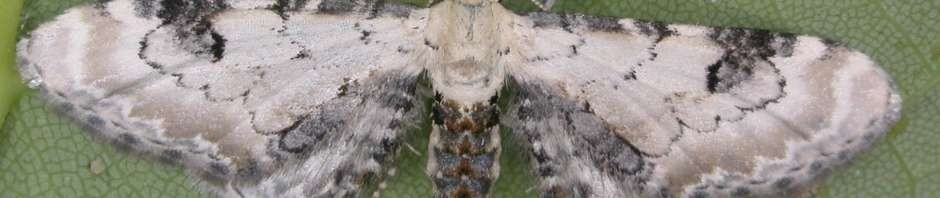
White-mantled wainscot

Agriphila tristella form without markings

Caloptilia falconipennella summer brood

Posted in Sightings | Comments Off

6 Spot Burnets at Dunwich

On a walk along the Dingle side of the shingle on Sunday, I saw hundreds of freshly emerged Six Spot Burnets with plenty of cocoons still to open. With it being so breezy they hadn’t dispersed and were mating alongside the cocoons from which they had emerged and feeding on any ragwort flowers in the area.
A brief update on the expected, imminent explosion of Small Tortoishell Butterflies. Most nettles at home in sun, and all of those along the river wall at Herringfleet are just bare stalks and flowers, hopefully most of the larvae found enough food to reach their final instar.

Posted in Sightings | Comments Off