Meeting this coming weekend 6th August 2016 – OULTON MARSHES SWT reserve

Here are the details for this weeks meeting.

6th August – OULTON MARSHES  TM509935. Meet in the car park of St Michaels Church at 8.00pm. From there we will move down the lane through a locked gate to the trapping area, so be prompt or you won’t get in! Site is a mix of wetland, reedbed and scrub habitats and has been very productive in the past. Possible target moths White-mantled wainscot, Fenn’s wainscot, Double kidney and Balsam carpet.

The meeting will now be Saturday night.

Neil

Posted in Events, Field meetings | Comments Off

Weird Buff ermine.

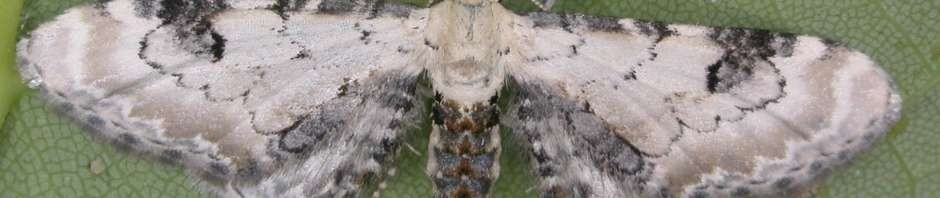
Had this ‘smoky’ Buff ermine with grey scales around the wingtips and on the thorax at the end of last month, thought I’d post a photo for interest.

Neil

'Smoky' Buff ermine

‘Smoky’ Buff ermine

Posted in Sightings | Comments Off

Late July at IGC.

The cooler wetter conditions today have given me time to collect my thoughts on the second half of July here at IGC.
I agree with Raymond, the season has been running around 2 weeks later than recent years here too. I’ve done a lot of trapping at home and at the work shed woodland, with a few nights trying other areas on the site. Some nights have been good with over 150sp seen with the best count this year so far on the 21st with 163sp noted. This is lower than my normal high counts in July in previous years. Generally as has been noted by others numbers and diversity are reduced this year. In fact some of the common species aren’t common this season – Large yellow underwings, Dark arches, Black arches and the other underwing species have all been in low numbers. However the Ear moth has been common.
Autumnal species have begun to appear now, with a Rosy rustic and now regular Canary-shouldered thorns. Another feature of late July has been unexpected late species, with Pale Oak beauty and Shears seen, both fresh individuals. The mid summer stuff has gone on longer too, with Festoon recorded up to the end of the month and Shaded fan foot seen in the last week, both normally over here by mid July. There are also undersize moths around like the Snout, a reflection on the poor weather earlier in the year when they were larvae trying to feed.
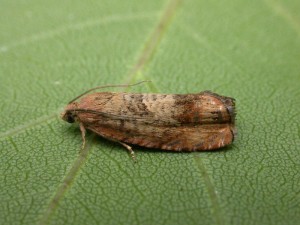
There have still been some highlights, starting with new site records, of which there have been 2. I’ve already posted my Catoptria verellus seen on the 24th, but the next night I caught an Evergestis limbata (very worn sadly). Not surprised at this one as it is an increasing breeding species now.
Other things of interest: Orthotelia sparganella, Pyla fusca, Coleophora paripennella (second site record 19th), Gelechia muscosella (20th), Platytes alpinella (a few), Bucculatrix nigricomella (22nd), Vitula biviella (regular), Gelechia senticetella (31st), Bucculatrix albedinella (31st), Goat moth (19th, seen trapping out on an area of Heath), Magpie (also 19th, rare here), Small rufous (26th), Tree-lichen beauty (regular at end of month), Double lobed (second site record 25th), Maple pug (a few at the end of the month, seems to be having a good season with several other recorders noting it), Beautiful hook tip (a few records, used to be a rare Suffolk moth), Toadflax brocade (third record 29th), Ling pug (2 seen) and Haworth’s pug (31st). I’ve also had 2 records of White-mantled wainscot with one seen on the 19th at a reedbed area I’ve not recorded it before at the far right end of the site, so it now seems to have spread along the entire length of the Mill stream here. Very pleased about this as it proves my reedbed management at the site is spot on for this moth. The other sighting was at a known site on the 26th.
Migrants, like others have found, have been thin on the ground with only Plutella xylostella around in numbers but I think most of these are home bred now. Have had an Anarsia lineatella (Peach twig borer) my second record on the 25th following the first last year and a Cydia amplana on the 29th.
As the new month starts, I wait to see what lies ahead. Will summer return for a final flourish?
Neil
Cydia amplana

Cydia amplana

Goat moth

Goat moth

Double lobed

Double lobed

Posted in Sightings | Comments Off

Late July Moths

Late July at home in Hollesley has improved from earlier in this season though numbers and diversity hasn’t reached recent years peaks. One night made the 200 species mark though. The season still seems around 2 weeks late to me although now signs of autumn are coming in with moths such as the Canary-Shouldered Thorn and Mouse.

Have taken a few of ‘the nice to get very occasionals’ that turn up: Pempelia genistella, Achroia grisella, Vapourer, Nut-tree Tussock, Antler, Wormwood, Mere Wainscot and Silver Barred. New for my site during the period have been few and far between. I have already posted on the Merrifieldia baliodactyla, a Schrenkensteinia festaliella to light surprised me. My first Monopis obviella after so many M. crocicapitella. A Recurvaria leucatella and a nice catch of a Yponomeuta sedella.

Caught a fresh Brown Silver Line on 19th that seemed out of season to me, though I don’t get many at home. Migrants have not been abundant this year apart from the Plutella xylostella that are now home grown too. Silver Ys, Udea ferrugalis, no Dark Sword-grass but have had a second Catoptria verellus and also an Oncocera semirubella. Then a nice surprise at Captain’s Wood on 31st with a good catch of around 150 species included a male Four-spotted Footman. Not seen the usual invasion of Large Yellow Underwings and Cnephasia pumicana this year. Hopefully not tempting fate!

Posted in Sightings | Comments Off

Walberswick moth night 30th July 2016 – damp conditions made for slow going.

Dry and reasonably warm when I left for this meeting on Saturday evening. About halfway to the site I could see a big dark cloud moving away, then the road became wet. Got even wetter with big puddles by the time I arrived at the site, and the temperature had dropped as well. Clear sky also. Those of us who have been trapping for many years know that this will mean a poor night for moths and this proved to be the case unfortunately.
8 lights deployed around the heathland and wetland habitats on the site, with only small numbers of moths coming in during the evening. So the damp and cool conditions plus the poor year we are having for moths generally meant we decided to pack up early. 84sp on my list, with most species only noted as odd ones and twos. The few highlights included: Brown-veined wainscot, Small scallop, Kent black arches, Dotted clay, Metendothenia atropunctana, Reed dagger, Crescent, Pempelia genistella, White satin, Bulrush wainscot, Lackey and Garden tiger. This site will probably prove to be better in warmer conditions with the variety of habitat so may be worth another try.
Felt distinctly autumnal as we we packing up with the mist around the site. Hope we still have a few more good nights before it truly sets in!

Neil

Posted in Events, Field meetings | Comments Off

Walberswick Common, Palmer’s Lane, moth night this coming weekend.

The moth meeting this coming weekend will be on Saturday evening. Grid reference TM490754. Meet at 8.30pm. Here are the directions again.

Entering Walberswick village, left after Church, Palmers Lane, follow single track dead end road to car park and mothing area. Mixed habitat of Heathland, Scrub, and runs alongside Marshland and dykes, dry reed-bed etc. A good selection of species can be expected including some Saltmarsh species from the not too distant river/estuary.
Hope to see you there

Neil

Posted in Sightings | Comments Off

The Wormwood

I trapped at home last night. Best moth being The Wormwood, a moth I seem to have the pleasure of encountering on average every year in recent years at home in Bradwell. Moth numbers were not impressive as has largely been the case throughout the season, but with a fairly good species count. Of last nights 123 sp others of possible note were, Webb’s Wainscot, Brown Scallop, Least Carpet, Dark Spinach, S. gigantella. All regulars for the time of year here.

The Wormwood 27-vii-2016 Bradwell, Suffolk

Posted in Sightings | Comments Off

Hummer et al

Just seen a hummingbird hawk in the garden this morning. The MV trap produced a nice August thorn and a rather jaded balsam carpet. This is the first time I’ve seen the latter species here. Late for the first brood and too early for the second, but I’m sure of the ID. We do have small balsam in the garden, but my hunch is that it’s a casual fly-by – as worn butterflies and moths often are. Also last night, the trap attracted a couple of male grow-worms and two or three hornets. The latter are regular at this time of year, but I noticed this morning that, of all the moths they could have selected to chew up, they chose three swallow prominents and two pebble prominents (i.e. all the prominents that were on offer). I’ve no doubt that different moths taste different, but I’m surprised at hornets showing any delicacy about what they dismember.

Tony H.

Posted in Sightings | 2 Comments

Two moth nights in Herringfleet

On the 21st Brian and I went to Herringfleet marshes. The target here was White-mantled Wainscot and I was also hopeful for Evergestis limbata as I was almost certain it was lightly established at nearby Herringfleet Hills, about 1/3 of a mile away. Some of this site tonight was dry and sandy tracks and we almost surrounded a dry reed-bed with the lights. Habitat is perfect for the target moth which didn’t show on the  20th July 2014 when I looked for it before but probably wasn’t yet out  around here that year.

Conditions were perfectly still and muggy and it was easy setting up mostly on the tracks. One of the first moths in was a White-mantled and in all we had 8, the second largest number I have ever seen as I believe we once had a higher figure on a SMG moth night several years ago now. No Brown-veined were seen but will undoubtedly be found in a week or so. Also perhaps of note many of the White-mantled arrived later in the night and were mostly near dry reed next to dykes and not near the reed-bed. Other species included Garden Tiger 10+, lots of Southern Wainscot, Double-lobed and S. gigantella. Silky Wainscot, Kent Black Arches, Leopard moth and D. mucronella. An impressive 183 species recorded. With 3 Silver Y in one trap the only migrant species excluding xylostella.

Sunday 24th Herringfleet Hills targeting E, limbata and 200 species + with Brian. The usual mix of habitats trapped on a very warm night. White mantled showed again with 3, none in the marshland trap. Site specialities E. limbata, A zellerii, P alpinella, G.alismana showed up. Along with M. palustrellus, Bactra furfurana, O. sparganella. Lots of Small Rufous seen. Best moth for us I guess was Barred Rivulet which is new for us both  in this area, having seen it only once before at Sizewell marshes. 218 species recorded. We left the site around 04.15 with none other than a single Silver Y in the migrant count, again excluding Diamond-backs.


Posted in Sightings | Comments Off

Havergate Island 21st July

In common with Neil and hopefully others it has been busy on the moth front recently. Late July has now reached the numbers peaks found in early July of recent years. I shall report home catches later but thought it worth-while to report a decent catch on Havergate Island. A total of 109 species whilst not great if it were at home is good there.

Common were Dusky Sallow, Synaphe punctalis but particularly the Scarce Footman. Amongst the Footmans were also Common and Dingy and one smaller one with bright yellow/orange forewings and deeper orange head. A Pigmy Footman var. pallifrons. There are areas of bushy lichen growth in the vicinity of that catch as on Orford Ness. I am of the opinion it did not fly up from Dungeness nor across the North Sea but is resident.

Ground Lackey had started flying, there were a number of Starwort, a couple of Rosy Wave and four Oak Eggars. Four Eucosma species turned up; cana, obumbratana, conterminana and the salt-marsh speciality E. lacteana which was new to me as too was Batia lambdella which is much larger than the more familiar B. lunaris. Six Coleophora were identified of which C. adspersella and C. artemisicolella were the most abundant with C. salinella also present. Only two species of Scrobipalpa were found, the commonest being S. nitentella but also present was one with characteristically few large spots, S. salicorniae (ex-salinella). Turned up Pediasia aridella which I have been hoping for at home but not spotted yet and two Caryocolum species marmorea and viscariella. Altogether a pleasing catch especially considering my previous very poor ones.

Eucosma conterminanaEucosma lacteanaBatia lambdella

Posted in Sightings | Comments Off