Toadflax brocade breeding in my garden.

Pleased to find a caterpillar of Toadflax brocade in my garden here on the edge of the golf course, the first breeding record for the site. Planted Common toadflax and Purple toadflax specifically for it but the larva wasn’t on either! Found it on an annual Toadflax that we also grow every year. A very smart caterpillar (see photo).

Neil

Toadlfax brocade larva

Toadlfax brocade larva

Posted in Sightings, Things to search for | Comments Off

Dunwich Forest meeting cancelled.

Weather forecast for both Friday and Saturday night has not improved with unseasonal wind and rain approaching so as expected the Dunwich meeting is off.

Next planned meeting at the moment will be Orfordness on Saturday 10th September, details to follow shortly.

Neil

Posted in Events, Field meetings | Comments Off

Moth night this weekend (19th/20th August) – Dunwich Forest.

There is a meeting planned for this coming weekend at Dunwich Forest. Meet in the car park at TM461711 at 7.45pm. From here we will move off into the forest down to the edge of the Walberswick wetland. Targets for the night Devon carpet plus wainscots.

At the moment the weather forecast is not looking too promising for either night so this meeting may well be called off. Watch this blog for news later in the week.

Neil

Posted in Events, Field meetings | Comments Off

Suffolk Resident Bactra lacteana

Paul Kitchener posted the first Suffolk record of Bactra lacteana that was captured at the eastern edge of Dunich Forest on 14th August last year ( www.suffolkmoths.org.uk/blog/index.php/2015/11/12/5907/ ) On 5th August this year I collected two Bactra lacteana at my Abbey Farm site at Snape. They were taken home for identification as small indet tortricids. This process involves them being put into a tube possibly along with other specimens and have to survive the journey back home prior to temporary storage in the fridge before identification. My photos are therefore no match to the others referenced here! They were in fact identified by dissection one male and one female. Abbey Farm is an appropriate habitat for the species; wet meadow and reed-bed in abundance. The species is small for a Bactra. Forewing length is 5 to 6 mm where-as that of B. furfurana at that site is around 8 mm. These two species have similar genitalia features. The species shows two parallel dark dashes on the forewing just short of the apex. This is not always entirely clear. Otherwise the pattern is variable as with other Bactra. UKMoths shows a stridently marked individual ( http://www.ukmoths.org.uk/species/bactra-lacteana/ ). The images in Lepiforum include a specimen with orange/brown shading as seen on my female and to a slight extent on Paul’s specimen ( http://www.lepiforum.de/lepiwiki.pl?Bactra_Lacteana

One to look out for in any suitable location in Suffolk (Waveney Valley sites?)

Bactra lacteana

Posted in Sightings, Things to search for | 4 Comments

Tortrix for confirmation

I caught this in my garden trap in Ipswich on 12/8 and would appreciate any comments. I can’t get away from the fact that it looks like Ancylis laetana but it is well outside the normal flight period. Am I overlooking something else?

Stuartimageimage

Posted in Sightings | 2 Comments

Ashby Warren 11th August

Brian and I revisited the same spot where we had the first emerging Four-spotted Footman of the season back on July 3rd. A long trek with the truck through a very wet and muddy at times, woodland ride. Lights on at 21.00, moths were quick to come in. With temperatures around 17c all night you would think it was going to be an excellent night. However after the first trap round an hour after switch on there was little else coming into the sheet, more akin to the temperature having dropped off to 10c. The long dull spell and a second trap round with little else new led to packing up, which  seemed to trigger another flurry of moths.

In total 90 species recorded, highlights being; Single female and male Four-spotted Footman indicated the end of their run for this season at the site. Clay Triple-lines and Barred Hook-tip from the abundant Beech. Birch Mocha and at several traps M. atropuncata, also many Catoptria pinella which although not uncommon I find a very attractive moth and this is the best site I know for it. Hornets were singles in some traps but they were very quiet despite the warmth of the night.


Posted in Sightings | Comments Off

Meeting this Saturday (13th August) – North Cove SWT reserve.

A meeting has been arranged for this Saturday night (13th August) at the North Cove SWT reserve. Meet in the car park for the reserve at 8pm, Grid Ref TM471905. The car park is situated just off Wade Hall Lane, Barnby. From the A146 take Marsh Lane, then first left onto Marsh Lane. At junction bear right onto Wade Hall Lane for 1.5km, car park is on left. To enter reserve we will have to cross the railway so its a bit of work for any bringing gear.
Targets for night are wainscots (possibly Fenn’s), other wetland species and Triple-spotted pug.

Posted in Events, Field meetings | 1 Comment

Oulton Marshes moth night 6th August 2016.

6 people turned up for this meeting at the very interesting Oulton marshes site that has produced good catches in the past. 9 traps deployed, with a mix of actinic and mv covering the wet meadows and woodland edge. Bit of a breeze blowing but it was still quite warm and we were able to take advantage of the shelter from the woods.
Not a bad night with 140sp on my list. As has been the norm this year moth numbers not great but at least there was diversity. Wainscots noticeably low, as were the underwings. Only one Garden tiger too, would have expected more. None of the 3 target moths for the night recorded – White mantled wainscot, Balsam carpet and Double kidney. Did get 3 Ancylis paludana though, a rare species feeding on Marsh pea. Had this at the site before on a previous visit. Other things of possible note: Chevron, Acleris shepherdana, Reed dagger, Gold spot, Epinotia cruciana, Brown-veined wainscot, Twin-spotted wainscot, Small rufous, Crescent (only a few, loads last time we came), Dark spinach, Orthotelia sparganella, Scallop shell, Olive, Webb’s wainscot. One of the finds of the night was actually discovered before the lights were switched on. Stewart Wright visiting from Norfolk spotted a Metalampra italica perched on bramble at dusk. Sadly it evaded capture so the rest of us did not see it but still a good record and expands its known range in Suffolk. Another moth of note was a very attractively marked Acleris laterana that caused a bit of discussion as to what species it could be initially.

Neil

Acleris laterana - never seen one like this before!

Acleris laterana – never seen one like this before!

Posted in Field meetings, Sightings | Comments Off

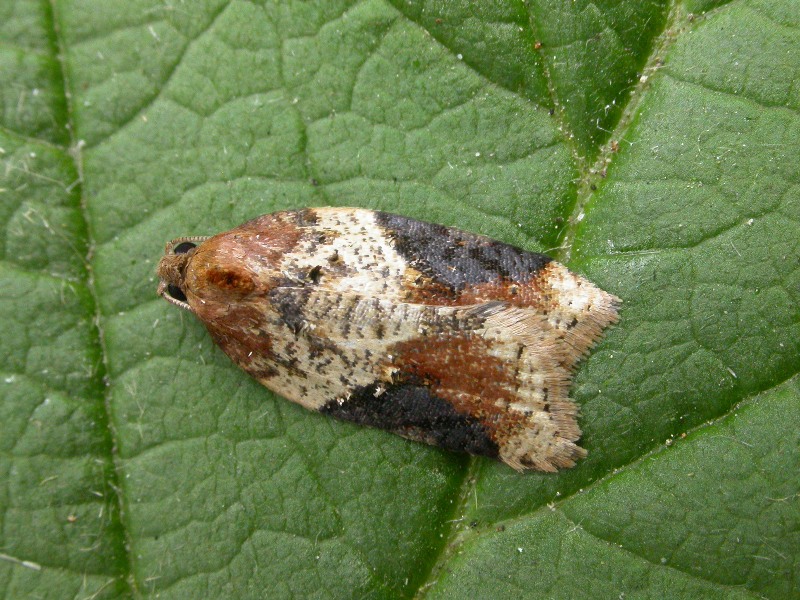
Caloptilia cuculipennella arrives at IGC.

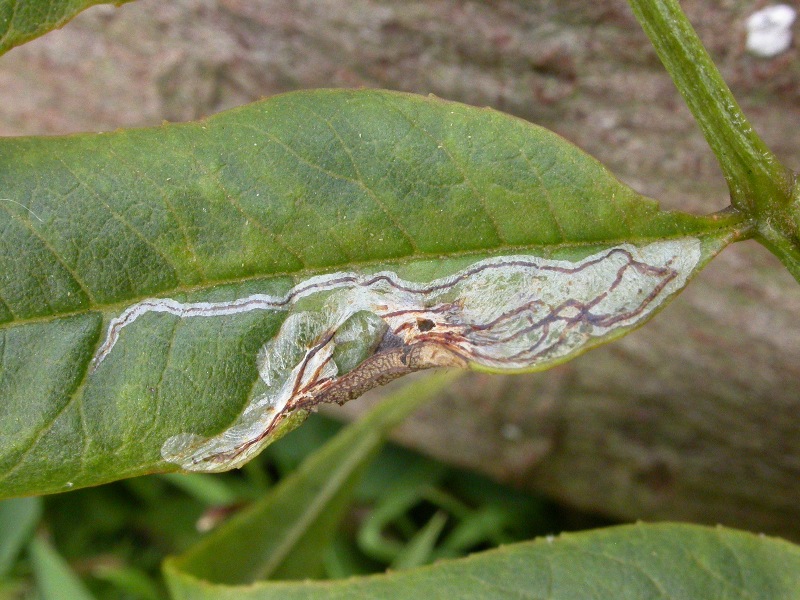
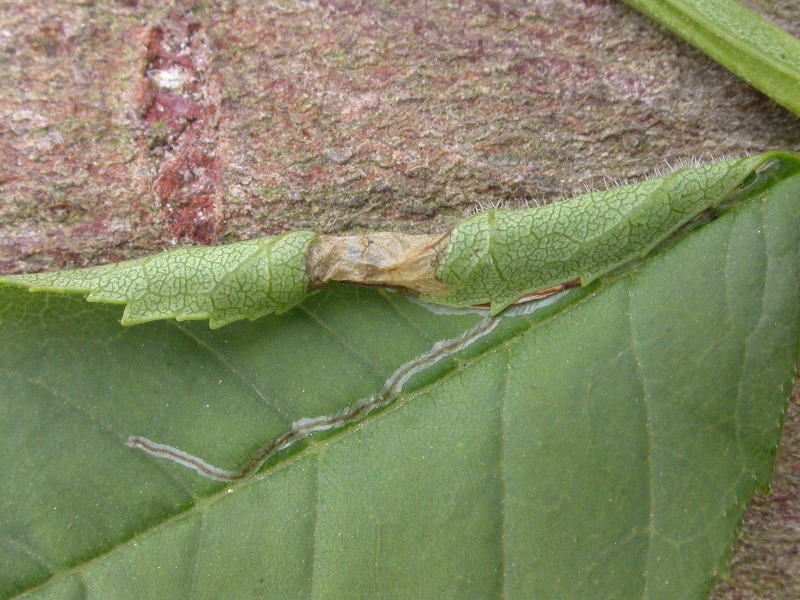
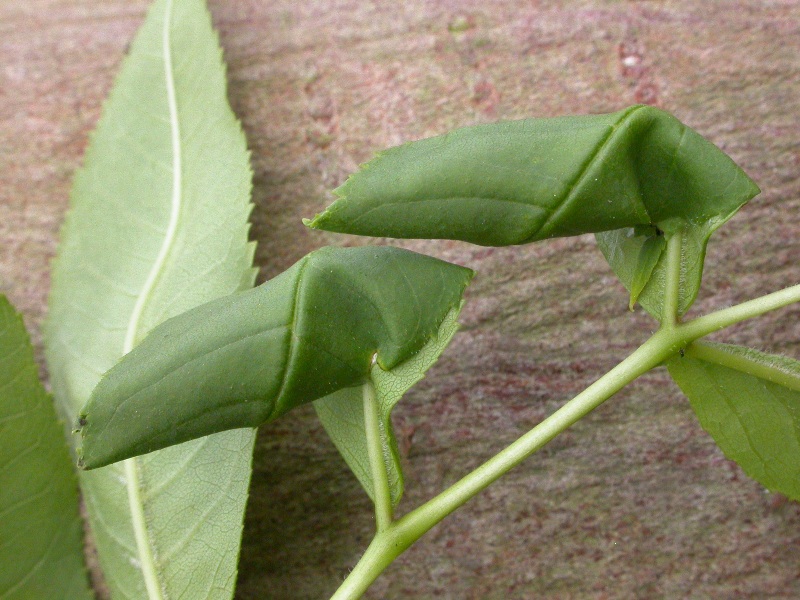
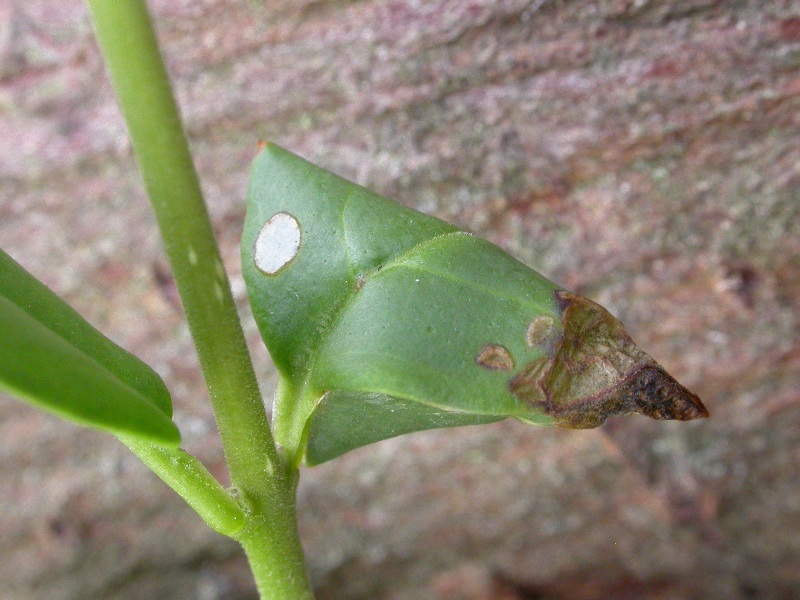
I’ve now had my first ever records of this species. My first observation was last Thursday (4th). Walking down my garden path on the way home from work, I noticed some spun up cones on Ash in my hedge. They looked very neat compared to Caloptilia syringella spinnings I am familiar with so I was intrigued as to what they were. My thoughts were maybe cuculipennella as I knew that fed on Ash too. A check of the literature and a web search confirmed my suspicions. I collected a few cones to breed out and also noted the early mines as well. These are very distinctive silvery tracks with frass laid out in a line, all on the upperside of the leaves. As the mine gets bigger it causes the leaf to fold over on the upperside (see photo). The larva then exits the mine and makes 2 neat cones, the second of which it pupates in, cutting a round weak area in the cone for an exit. I found all these stages on my small Ash tree. At a later date I also located all the same signs on garden privet in my hedge too, there were loads of mines and cones! So the moth has arrived here in force.
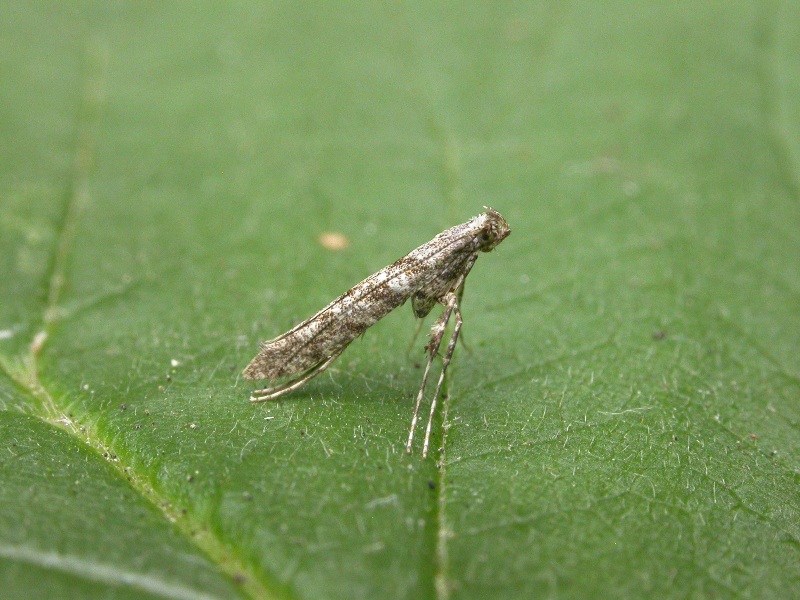
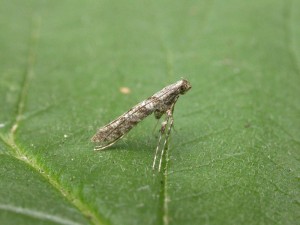
Then, before any mines hatched out, I trapped an adult moth on the night of the 6th, not too far away from my hedge. It was slightly worn but still clearly cuculipennella. I would recommend searching any Privet or Ash close to you for the mines of this moth to see if it has spread any further, certainly if you are in the Ipswich area. Hopefully my photos will help identify the signs. Good luck!

Neil

STOP PRESS – Just checked my container of mines/cones and an adult cuculipennella has emerged from a cone on Privet, proving my id is correct. Photo to follow.
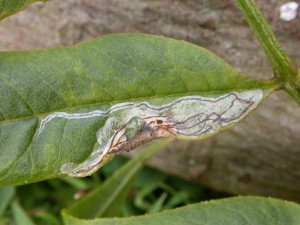
Silvery mine on upperside of Ash leaf
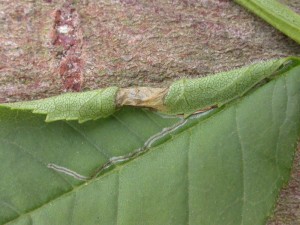
Silvery mine on upperside of Ash leaf

Later mine showing folded over leaf covering the earlier gallery again on Ash
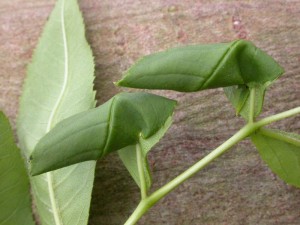
Later mine showing folded over leaf covering the earlier gallery again on Ash

2 cones on Ash, note how neat they are - not brown and untidy like syringella cones
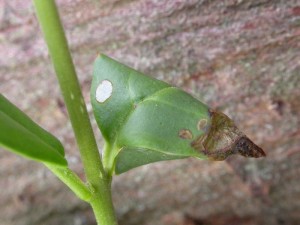
2 cones on Ash, note how neat they are – not brown and untidy like syringella cones

Final cone with exit cut out on garden Privet
Final cone with exit cut out on garden Privet

My Caloptilia cuculipennella trapped on the 6th
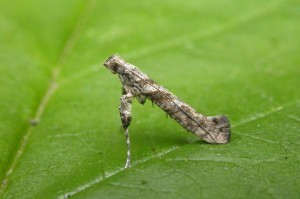
My Caloptilia cuculipennella trapped on the 6th

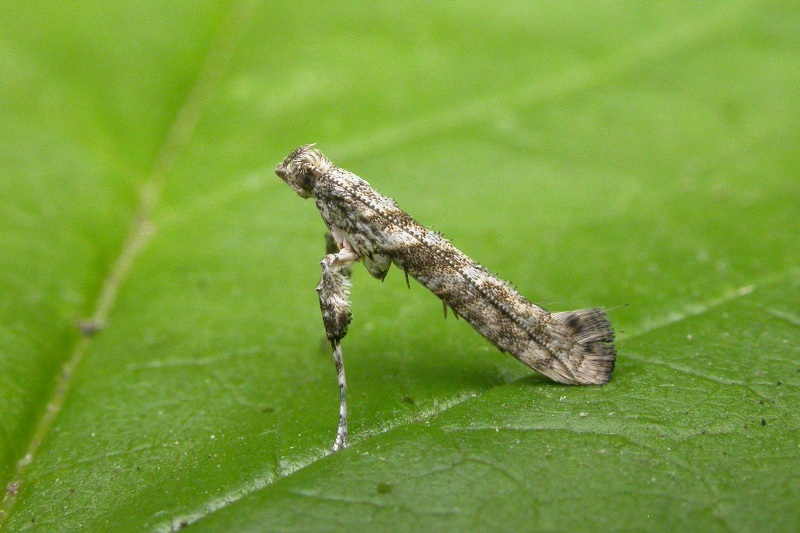
Caloptilia cuculipennella emerged from cone on Privet
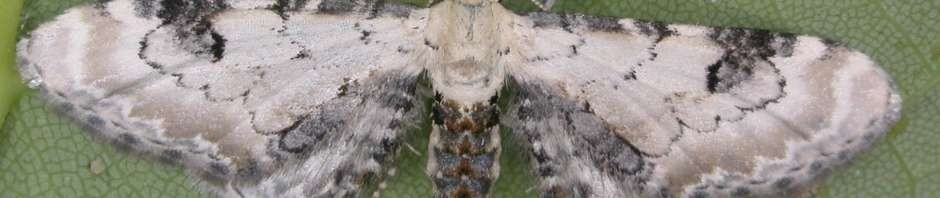
Caloptilia cuculipennella emerged from cone on Privet


Posted in Field work, Sightings, Things to search for | 2 Comments

Two recent trips away from home.

Visited the Suffolk Wildlife Captain’s Wood on 31st July. This is the first year I have been visiting the site and whilst the year is not the best for moths I have been able to chose when I visit at short notice. So after a slow start to the year I have been getting some better catches. The site is a very old woodland site. I am not so sure it qualifies as ancient though and is by no means natural with planted Beech, Oak, Sweet Chestnut, Scots Pine and coppiced Hazel along with the common Silver Birch. There is excessive deer grazing, an under-storey of bracken and some invasive Rhododendron. It has provided me with some interest. The Knot Grass is present there and the lovely Grass Emerald was also caught on 31st along with the Large Emerald that is common at the site. Vitula biviella was present along with Dioryctria simpliciella and sylvestrella on 31st and Cedestis subfasciella has been caught on several dates now. All from the pines. The 31st turned up Tischeria ekebladella, Roeslerstammia erxlebella and a first for me of Stenolechia gemmella. A good selection of Footmans included the Dotted Footman and a single male Four-spotted Footman.

On 5th August I visited my site at Abbey Farm, Snape. This is an RSPB site that used to be farmland and is gradually being transformed. The site is large but to date I have run my traps in a fairly small part of it. Partly owing to the fact I have mains power and have not yet taken my generator along. Despite this the catches have been interesting in include a mix of species from heath, woodland, farmland, wetlands and estuary. There is an area of old established alder at the site but the Kitten on the 5th was the Sallow Kitten. There was an abundance of Straw Dot and Reed Dagger. A True Lover’s Knot, Garden Tiger a Sycamore and several Copper Underwing. A Coronet, the Brown-veined Wainscot and Webb’s Wainscot. A first for me was a number of Orthotelia sparganella. A rather smart moth I thought especially when rosy tinged with prominent spotting. Also quite smart amongst the micros was an Epinotia ramella with contrasting white and dark halves of the forewing and an Epinotia nisella with a strong large patch of orange along the dorsum.

Posted in Sightings | Comments Off