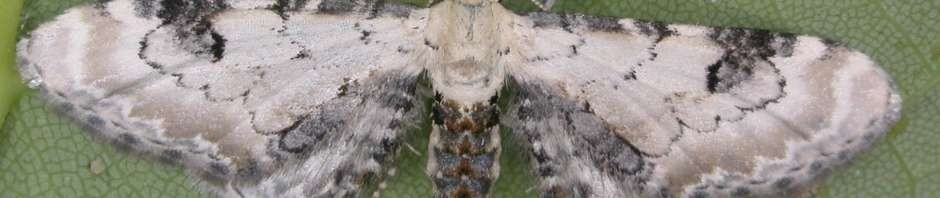
Out of the fridge and I got one shot at it before it was off again. It’s got more energy than I have.
Paul

Tuta absoluta, Ipswich, 4 October 2016
Out of the fridge and I got one shot at it before it was off again. It’s got more energy than I have.
Paul
Tuta absoluta, Ipswich, 4 October 2016
This tiny (5mm long) moth was in my 125W MV Robinson trap this morning and would easily have escaped my attention had I not been checking the trap contents inside an outbuilding as is my usual practice. It has to be one of the most active micros I have ever come across, running almost constantly around the pot from the moment I took it off the window until the moment I gave up trying to photograph it and popped into the fridge several hours later. I suspected Tuta absoluta from it’s appearance and behaviour and Raymond Watson has been able to confirm the identification after viewing this one and only record shot I was able to achieve. If, by some miracle, I can get a better image I will post it in a future blog! So, with winds from the east, look out for this, but you’ll have to be quick!
Paul

Tuta absoluta, Ipswich, 4 October 2016
On the 27th i caught this Caloptilia cuculipennella in my garden in kessingland. In the last month only 4 new sp after 1 year trapping here,Tawny wave, lunar yellow underwing, four spotted footman and what looks like Scrobipalpa nitentella. Also 2 Pearly underwing, 3 dark swordgrass and 3 Palpita vitrealis. Best insect Urocerus gigas [giant woodwasp/sawfly]

I believe this moth is Nemapogon granella and I found it in my kitchen (Ipswich, IP4) last Monday evening (26th September). If my identification is correct this is not the first time I’ve come across one indoors in Suffolk. The other was in the kitchen of a friend’s house in Denham, north Suffolk, on 3rd March 2011 (the ID was confirmed by gen. det. by Jon Clifton). Does anyone know of other Suffolk records in the intervening five and a half years? It is quite an amazing coincidence if there haven’t been any.
Thanks, Paul

N. granella, Ipswich, 26 September 2016

With a prospect of windy weather for later in the week and my not being able to set the traps this evening I thought it time to take stock on the last few weeks. With the exception of one trip out to Abbey Farm on 23rd September, that was a very poor catch at only 18 species. my trapping has been at home. The ‘standard’ autumnal species have been caught though not especially diverse. Lunar Underwing, Black Rustic and Autumnal Rustic have been the commonest so far. Also have Brick, Red-line Quaker, Brown-spot Pinion, Sallow, Barred Sallow, Dusky Lemon Sallow plus a single Pale Pinion. An unusually large number of Feathered Brindle this year. Must have caught as many so far as the last 5 years altogether. Also taken one Deep-brown Dart at home but four at Abbey Farm (the only interest in that catch). A few micros still around including 3 Caloptilia species and Calybites phasianipennella, Clepsis consimilana, Crocidosema plebejana, Monopis crocicapitella and Ypsolopha sequella.
From the point of view of unseasonable species I feel it is becoming increasingly difficult to decide what is unseasonable with the continuing warm autumns, however there is a prominent ‘second’ emergence of Pediasia contaminella. A Grey Dagger and Small Fan-footed Wave on 29th. Pempelia palumbella on 13th, Rosy Footman on 14th and a Buff Footman on 23rd. All of these were in good condition rather than having ‘survived’ from the usual time of appearance.
Immigrants have continued to arrive here at Hollesley, I have added the Scarce Bordered Straw to the list for the year, Convolvulus Hawk-moth has arrived in pairs again on two occasions. Others have been Palpita vitrealis, Gem, Vestal, Small Mottled Willow and Dark Sword-grass. The routine immigrants of Silver Y, Udea ferrugalis and Nomophila noctuella have been regular and though U. ferrugalis is down to ones and twos now the number of Nomophila is still high. Plutella xylostella is now down to countable numbers too, many of them home bred I suspect. Also of interest is Tuta absoluta. They came in as immigrants around 13th and I have taken three. Suffolk moth-ers should look out for them. They are small and very active, so need to be spotted in the trap as likely they will be the micro that gets away as you pull the egg trays out. And, it happened this late last year too; small white Blastobasis that dissect as B. adustella. I suspect these are immigrant though they could be a second brood. They are the right size for B.adustella and B. lacticolella usually has some cream/ochre tint.

I have trapped 2 Box Tree Moth Cydalima perspectalis at Bawdsey Hall this month. The first was on the 9th September with a second on 14th. I believe these to be immigrants from France where the species can be very common. These records also fit with coastal records during this same period from Portland and the Kent coast.
These are the first records of adult moths I have heard of in Suffolk. I would be interested to hear of any records I have missed or of any records of defoliated Box plants.
The photo shows the Box Tree Moth together with the Olive-tree Pearl Palpita vitrealis caught during the same period.
A good month so far for moth immigration with several Gem, Vestal and Bordered Straw; Convolvulus Hawk-moth enumerates nine individuals so far this month and regular Scarce Bordered Straw. A Porter’s Rustic on 12th September (the best night of the month so far here) was the first here since 2008.
5th September here in Bradwell saw 65 species of which highlights were Vestal, Wax Moth, 9 Rusty-dot Pearl which outnumbered Diamond-back. New for the progressing season was Frosted Orange.More seasonal moths followed on the 7th with Sallow and Black Rustic firsts for year. Highlight was a Dark Sword-grass, seen less often than Vestal here in the last four years. Rusty-dot Pearl numbers rose to 13 this night. Single Rush Veneer seen as has been the case for previous few nights. On the 8th European Corn-borer was probably the best, very late for here. Satellite, which I thought was pretty early, and a Red Under-wing the pick of the bunch.
Now onto those nights which could hopefully produce some interesting migrants starting with the 12th. Unfortunately yet again as was always the case last year a favourable wind off the continent coincided with a full moon and cloudless skies. This undoubtedly decreased the yield at traps throughout the Country as if cloudy I think there would have been widespread decent results. In an effort to increase the catch I placed an mv in an un-trapped location this season in some shade where I discovered that I did indeed have some wasps after all, such high numbers infact that I pulled the plug on the trap without going through it, the actinic did dismally as expected under the conditions 36 species recorded with nothing worth a mention other than Red Under-wing and Rusty-dots. Annoyingly, thick cloud cover was visible on the horizon, this arrived at dawn and lingered until 2pm. I didn’t bother again until the 15th as high cloud tarnished the moons appearance a little which encouraged me. Diamond-back numbers were high at 42 but a Palpita vitrealis, my third for home, was the highlight. The first Brown-spot Pinions of the Autumn seen.
What a strange year we are having. Winter in Spring, wet cool start to summer followed by drought then hot and dry start to autumn! Now we have a break in the weather with rain a chance for me to see how this has affected the moths for me.
Average counts of species for the month have been over 50, so not bad really considering it is September. Best night was the 6th when I had 86sp in 2 traps. Numbers of the commoner species have increased, some due to the warm weather and also some probably due to migration from Europe. Certainly the case for Large yellow underwing and Setaceous hebrew character. Other winners Maiden’s blush (a strong second brood here), Light emerald, Square-spot rustic, Feathered gothic, Lunar yellow underwing and Dusky thorn. I’ve also seen some small size moths – Willow beauty (like Raymond has already noted) and Flounced rustic. Had a tiny one of those about half the size of a normal one.
Other notable resident species: Heath rustic (2 records), Centre-barred sallow (2 records, rare here hence why I’m reporting it), Crambus hamella (best ever year with over 10 noted including 7 on one night on the 6th, normally only seen in ones and twos), Anania crocealis (2nd site record on 6th), Agriphila latistria (6th), Caloptilia hemidactylella (12th) and Bordered beauty (13th).
Autumnal species have also started to emerge, but not yet in great numbers with Orange sallow (1 only, just wings as a Hornet ate it!), L-Album wainscot, Autumnal rustic, Red-green carpet (13th), Brindled green and Feathered ranunculus recorded. No Black rustic nor Lunar underwing here yet that others have seen already.
There have been some what I would call unseasonal moths, maybe late records due to the season this year or perhaps moths tricked to emerge by the warm weather. I’ve had the following: Campion, Sharp-angled carpet, Chinese character, Small phoenix, Purple bar, Marbled white spot, Small rivulet and Riband and Plain waves. Would be interested to hear what other recorders have noted out of season.
With warm weather blowing up from France there of course had to be some migrant interest during the period. Have already covered my sighting of Convolvulus hawk in an earlier blog, but did get a few other species as well as the usual commoner migrants in low numbers. Vestal (3 trapped plus another seen in the daytime), Four-spotted footman (male on the 12th, or is it now resident in low numbers now as seen annually), Cydia amplana (2 records, again, maybe resident locally) and Nephopterix angustella (2 records, not classed as resident here with me, no foodplant). My overall impression of this last record-breaking warm spell was that it wasn’t as good as it should have been, a trend that I’ve felt all year sadly. The bright moon didn’t help much but even so there should have been more migrants nationally as well as locally. Convolvulus hawk is the only species seemingly around in good numbers. If only we had those warm nights in June/July they would have been of more use rather than being wasted at the tail end of a poor year. Just my own view there others may disagree.
So now autumn seems to have arrived properly now, what will the second half of the month bring? More sallows hopefully please, the traps have been dominated by brown moths for a while now!
Neil

Vestal
Been thinking it was about time I posted again and especially in this migrant rich spell, so after a first class catch on 13th I’ll bring it up to date. Warm days warm nights. 26 daytime and 20 celsius at dawn this morning and yesterday here and I suspect warmer still further inland. My species total on 13th made 71 which is pretty good for September. the first autumn species around with a Black Rustic, Chestnut and Feathered Ranunculus and a Sallow and Large Wainscot yesterday. However the immigrants made it more of a stand-out catch. Two Convolvulus Hawk-moths that were a male and a female showing me the big difference between the sexes in size and markings. Two Vestals and Small Mottled Willow plus the regular Silver Ys, Plutella xylostella, Udea ferrugalis and Nomophila noctuella. The last 3 days have also seen Dark Sword-grass, Four-spotted Footman and Palpita vitrealis but to cap it all the 13th brought me a Blair’s Mocha. I gather this is increasingly seen as an immigrant in recent years. The next 2 nights also look to have as much promise so I’ll keep my fingers crossed for everyone. There was also a spate of immigrants a couple of weeks ago that saw a few Vestals and brought me a Bordered Straw, Gem and Oncocera semirubella. The photo of the Convolvulus also shows a Setaceous Hebrew Character and Large Yellow Underwing that are species thought to be bolstered by immigrants at the moment. Amongst them I have also had my first few Lunar Yellow Underwings of the year that are possibly immigrants as the species seems to be on the decline, though I have taken it regularly at Captain’s Wood (Sudbourne).
What else? Pleased to record a new Nepticulid for the garden on 13th. Ectoedemia sericopeza no doubt breeding on my Norway Maple and differs from the similar E. louisella in having a pale coloured collar. A lot of Willow Beautys this autumn that are unusually small. Anyone else noted this? Ruby Tiger has been prominent recently too and a couple of weeks ago there was a significant second brood of Evergistis limbata. Also abundant this year has been the Dusky Thorn, having taken few till this year.
My trips off to other sites have only turned up interest at Captain’s Wood on 6th where I took my first locally resident Syncopacma. Two specimens of S. larseniella in the trap. Also a couple of salt-marsh Coleophora made it there too. C. asteris and C. salinella. However the greatest numbers in the catch at Captain’s Wood on that occasion was of bugs and beetles, mainly the Forest Sheild-bug, leaf-hoppers and Bradycellus verbasci that seems to be turning up in numbers everywhere this year as is the Sheild-bug.


As Neil has already mentioned, now seems to be as good a time as any to add Convolvulus Hawk-moth to your site list. I’ve always dreamed of catching one of these classic migrant moths in the garden and now the wait is finally over. So, it was an odd mixture of elation and relief when I found this chap sitting on the shed by the trap this morning. I just hope that I don’t have to quite so long till the next one!

Woolpit Convolvulus Sept 2016