crash, Bang, WALLOP

It’s been a bit like that these last couple of days, and this morning was no exception! 

My lack of blogging isn’t a reflection of the fact that I’ve not been running a garden trap but more a case of having little to report … unless Dark Arches are big news once again. It’s not all dome and gloom however because I have been catching the odd Privet Hawk and this, Elephant, Lime, Pine & Poplar were all very much admired by the dozen or so people who turned up for the inaugural Woolpit Moth Morning at Lady’s Well Wood. The event was timed to coincide with this years woodland themed Moth Night and my guest were all amazed at just how colourful some of our moths can be … but we already knew that. 

But back to the garden. Conditions over the last few nights have been ideal for picking up potential new species. Things got off to a good start on Wednesday when I took a Dark Swordgrass. Admittedly, I’ve recorded this here before but at least it proved that the odd migrant had finally made it this far inland. Thursday night delivered a Birch Mocha (which was new), as well nice to see Magpie Moth, Campion and Small Phoenix. 

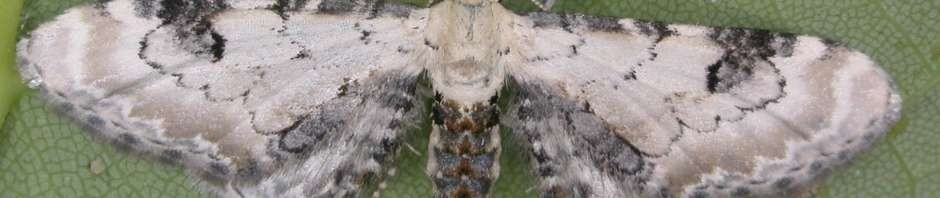
Last night was even better. Having dashed out at silly o’clock to cover the trap up as best I could while the thunder and rain did there stuff, my reward for rummaging through soggy egg-trays an hour or so later came in the form of a Tree-lichen Beauty and the stunning little micro Bisigna procerella. I’ve been keeping an eye out for the former for a while now but the latter came like a punch out of nowhere. 

According to UK Moths, the first UK record of procerella came from Hamstreet, Kent in 1976. It has since been been found elsewhere in south-east, including a few records from Sussex but this appears to be the first time it has been recorded in Suffolk. My next challenge is to try and get a decent photo. No pressure then :-)

Posted in Sightings | 1 Comment

Thunderstorms bring bumper catch.

My first post for a while as I’ve been very busy and also away on holiday enjoying the Lepidopteria of Bulgaria!
With the heat yesterday due to spark off storms, thought I’d put some traps out in the reedbed area on the golf course to see if White-mantled wainscot was on the wing. Woken up by the thunder and lightning in the early hours, so got up at 5am to go and check the traps. Had to wait for a while as it then tipped it down with rain as a storm came right overhead, bit risky to go out in that! Once at the traps, all were very wet unfortunately but on the plus side looked full of moths. Another deluge forced me undercover again for a short while, then the rain gave up so I could get on with recording. Took me nearly 3 hours to go through, Denice was getting ready to send out a search party for me as it had taken so long! In the end 223 species were noted, with a couple more to still sort at a later date. Quite a lot of the large number of small micros like Coleophs, Cnephasia and gelechids ignored due to lack of time, if I’d looked at these who knows what the final total would have been? Migrants were represented by 1 Silver Y and loads of Plutella xylostella. Strange that no other migrant species were found, a trend that others have noted as well recently I see. Due to wet weather on the continent perhaps, have heard that there has been a lot of rain there (and in eastern Europe too where I was last week, affecting numbers of Leps quite significantly).
So the highlights were all ‘resident’ species. Best macro 2 of the target moth, White-mantled wainscot, good to note the colony here is still extant. Others: White satin, Festoon (10), Nut-tree tussock (over 30 noted), Small scallop (3), Canary-shouldered thorn (first for year), Shaded fan foot (4, all worn), Small rufous, Copper and Svensson’s copper underwings (first for year), Tree-lichen beauty (2, first for year), Silky wainscot, Lesser spotted pinion, Beautiful yellow underwing and Dotted fan foot. Also noticeable were large numbers of both Pebble and Scalloped hook tips, certainly the highest number I’ve ever seen anywhere, didn’t count then unfortunately again due to the huge volume of moths.
Of the micros, best was a single Caloptilia hemidactylella. I’ll only list a few others as there were a lot of species. Caloptilia populetorum (2), Lesser wax moth, Pyla fusca (only a few records of this for the site), Epinotia signatana (at least 10 noted, again only odd records for this), Blastodacna atra (second site record) and Carpatolechia alburnella (3). I always hope that these warm humid nights will bring new species to the site list but none were noted this time but with the warm weather set to continue hopefully something will turn up!

Happy trapping!

Neil

Posted in Sightings | Comments Off

Hot stuff?

I was at Minsmere yesterday – saw the pratincole but not the yellow-legged tortoiseshell. Interesting that the east winds that brought the tortoiseshells to Holland and Suffolk did not bring many moth migrants (at least, apart from a few diamond-backs I’ve had no migrants this last week). I keep looking at my garden buddleias but no odd tortoiseshells as yet.

Interesting week for my garden MV – a sprinkling of what are quite good moths for me, species that I only see every three or four years. Most notable last night was my first oblique-striped carpet (to go with my oblique striped from last year), dotted fanfoot, Kent black arches, suspected, miller, garden tiger et al. Got what I thought was my second ever butterbur, but closer examination turned it into a rosy rustic. A good turn-out of what I consider to be my local specialities – muslin footman (having another good year), beautiful hook-tip, orange moth, cream-bordered green pea. And glow-worms.

So, nothing amazing, but the continuing warm weather keeps things interesting.

Posted in Sightings | 1 Comment

Early July Moths

Time for me to report my exploits. I looked at the weather fore-cast for the National Moth nights and decided not to trap on the Friday, though as it turned out the fore-cast was over pessimistic. So I trapped on 2nd July which held promise with warm southerly winds that yes started the migrants and then also on 3rd. I trapped at home and Hollesley Marshes on 2nd and home and Staverton Park on the 3rd and was nearly overwhelmed by the volume of the catches especially the many hundreds of micros at Staverton. Two further days at home brought my biggest catch to date of 206 species on 11th. Report on the Marshes will have to wait but for the others: I was a little disappointed that the Blotched Emerald did not show itself for a Woodland based moth night at Staverton where the traps were overwhelmed by Argyresthia brockeella, goedartella and glaucinella, Brachmia blandella, Tischeria ekebladella (one E dodonaea), Zeiraphera isertana, Parachronistis albiceps and Coleophora species of which still a large number to work through. Nothing unusual amongst the macros but perhaps of interest was the Red-necked Footman, a Drinker, a late Scorched Wing, Sharp Angled Carpet, Small Scallop and a Lunar Yellow Underwing. Two little runners turned up on the 3rd. The first was a second Niditinea striolella which is an encouraging sign that Staverton Park is a stronghold for the species, the other was a dark species from The Thicks that proved to be Tinea columbariella. It pleased me to take Monochroa cytisella that I had not seen before and a number of less common micros; Scoparia basistrigalis, Strophedra nitidana, Epinotia signatana, Cosmiotes freyerella and Phylloporia bistrigella. A species count of 155 in advance of the Coleophora still to ID.

At home; I have been hoping that Agonopterix assimilella would settle into my brooms, but it was A nervosa that has turned up first. Also took an A ciliella. Most abundant species have been Synaphe punctalis and Chrysoteuchia culmella but have yet to be invaded by the Large Yellow Underwing this year.  In addition to the Agonopterix, species new to my site list have been, the Mere Wainscot, Clouded Brindle, Anania verbascalis, Endothenia oblongana, Oegoconia caradjai, Phyllonorycter cerasticolella, Coleophora salinella and Dystebenna stephensi. Migrants that have started include Dark Sword-grass, Oncocera semirubella and Platytes alpinella.

Posted in National Moth Night, Sightings | Comments Off

Great Warren, Blundeston 12 July

Brian visited me at the site but was not trapping due to his late night the night before in Norfolk. Perfect conditions to start but from around 00.30 the full moon was out and numbers stopped building. 135 species in total, many of which had been seen a week previous at Wicker Well which is not far from this site which is dry hillside near Carr.
2 S. punctalis recorded again, 4 Yarrow Plume, Agonopterix ciliella. Among the macros, Elephant and Poplar Hawk in number, single Privet, 2 Oak Eggar and Cream-bordered Green Pea. Best macro on this occasion was a Red-necked Footman, the furthest from Ashby record where the stronghold appears to be. The site is a good 3 miles South of Ashby and I live only 2 miles North of Ashby so I shouldn’t be surprised to see a wanderer at home sometime.
On the migrant front it is very quiet indeed, even compared to this time last year, but there were numerous Diamond-backs Saturday night. My best count for Silver Y being 2 this season, which I equaled today with a daytime return to Great Warren.

Posted in Sightings | Comments Off

Bedstraw Hawk at the Hall

I was lucky enough to find a pristine Bedstraw Hawk-moth in one of the Bawdsey Hall traps this morning; this representing the sixth Bawdsey record and the ninth hawk-moth species of the year.

Several Privet Hawks were also trapped and in good condition.  The Elephant Hawks are starting to look rather worn now and the odd Pine, Poplar, Eyed and Small Elephant still about.  Only a couple of Lime have appeared this year.

Several Humming-bird Hawk-moths have been seen nectaring by day in recent weeks too.

A Peach Twig Borer appeared earlier in the week following the two seen here last year and a stunning example of the Rosy-striped Knot-horn the same night.

Posted in Sightings | Comments Off

Footman@Somerleyton Estate

3rd July, Brian and I revisited the site by Fritton Lake where we first encountered Four-spotted Footman on 22 June obviously hoping for more, and a female which I have never seen before. 9 traps deployed, 7 on the main ride from the point where we got the first one, last visit, covering 425 metres to the 7th trap closer to more concentrated broad-leaved woodland. The other 2 on spurs off the main ride. What a night it turned out to be. All the good micros seen on the 22nd were seen again with the addition of Indian meal moth identified by Matthew Deans. Gold Swift was seen, I think there were only two Hawk-moths in the whole catch of 162 species. Red-necked Footman had a good turnout with 27 counted. Four-spotted turned out in abundance and 45 recorded, potted to avoid recounting and including 7 females. The furthest trap from the starting point accounted for 20+ alone, suggesting we may have only just reached the peak area for the moth at the site. We left in daylight at 03.45. Four-spotted Footman, Female, Ashby 03-vii-2014

On the 5th I went to Wicker Well, Somerleyton, and trapped on  woodland/arable margin high up over the broad hidden by trees. 164 species, my highest solo count to date. Best macro was Muslin Footman, best micro probably Evergestis limbata, the second area record but I expect to see it again soon. It was really a night for micros, interesting to me where,  crocealis, S. punctalis, Yarrow Plume, A. xylosteana, E. quadrimaculana. Hoards of midges and Mosquitos. A Hornet gave me some grief going to the actinic with my head torch on and a Barn Owl was attracted to one of the traps. Managed to get packed away and home before the rain set in.

Posted in Sightings | 1 Comment

Early July in Burgate

Conditions were perfect last night (the 5th) for a full trap so a bumper catch was expected. This proved to be the case with pride of place going to single Blackneck, Coronet and Gothic: all new site records. Also of note were Orange Moth (at least 6, but they do tend to get out of the trap during the night), White Satin, Small Scallop and Black Arches. Plus the usual Beautiful Hook-tip and Cream-bordered Green Pea.

Three new records in the last few days have helped fill in a few gaps in the site list: Plain Golden Y (1st), Oak Eggar and Sycamore (both on the 3rd). Other good moths include Minor Shoulder-knot (first record since 2012 on the 3rd), Garden Tiger (second record on the 2nd), Bordered Beauty and Dingy Shears.

Mark

Posted in Sightings | Comments Off

Hummers

Three humming-bird hawks together at the garden valerian this afternoon at 16.00 (when the weather changed and it was suddenly warm and sunny). Then another two (or two of the same three) at 17.00.

Posted in Sightings | Comments Off

Moth Night 2014 at Bawdsey Hall

Moth Night 2014 is fast approaching (3 – 5 July).   Bawdsey Hall is hosting an event and all interested lepidopterists are invited on the evening of Friday 4 July.   I would appreciate as much support as possible, especially as Bawdsey Hall and I personally have put a lot of effort into this and I have been appointed the East   Anglia regional representative for Moth Night 2014.

Arriving on Friday evening at around 7 – 8pm, a tour of the grounds will follow with deployment of moth traps.   Please let me know how many traps you will be bringing?

Badger watching will once again be on offer together with the chance to see the nesting Sparrowhawks and roosting Swifts on webcam.

Please let me know asap if you are coming so that we can plan the event and in particular the catering.

Many thanks.

Matthew – matthewjdeans@yahoo.co.uk     Telephone 07912 859747

Even though Bawdsey is a regularly trapped site there is still an opportunity to record new micro-lepidoptera for the site, as so many moths are trapped and many micros get missed amongst the masses.

Posted in National Moth Night | Comments Off