Black-spotted chestnut Conistra rubiginosa arrives in Suffolk.

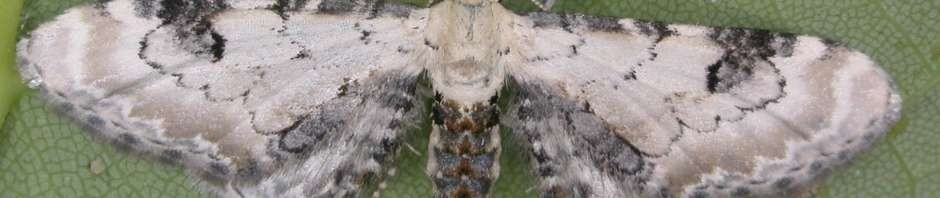
Mike Marsh and Gillian Hammond were lucky enough to trap a specimen of the Black-spotted chestnut in their 40w actinic trap put out on the night of the 27th November in their Felixstowe garden. They kindly sent me a photo (see below) to confirm the record. As far as I know this is the first Suffolk record, so well done to them!
This is certainly a species to keep an eye out for as it is expected to spread from its colonies in north Kent – perhaps this is evidence it already is!

Neil

The Suffolk Black-spotted chestnut

The Suffolk Black-spotted chestnut


Posted in Sightings, Things to search for | 1 Comment

Year list now complete at IGC.

The warmish nights in the latter part of the week tempted me to try some trapping. This resulted in the capture of the last 2 expected species for the year here at IGC – Scarce umber and the Northern Winter moth.
Ran 2 125w traps on the night of the 27th (1 in the garden plus the other in the woods). 17sp caught (103 moths). Good numbers of Mottled umber (19) and December moth (53). Northern winter (2), Scarce umber (5) and most surprisingly a Dotted border (my first ever at this time of year, normally seen in Feb/March) provided the interesting sightings.
Ran 3 125w traps on the 28th (1 at home again plus 2 in the woods). Although it was still mild the sky was clear and this had the effect of a dramatic reduction in the number of moths caught. 11sp and 38 moths caught. Mottled umber total 4 with the December moth total 6. More Northern winter (4) and Scarce umber (7).
With cooler nights now on the way and the year list complete it’s time to pack the traps away till next year when it all starts over again!

Neil

Posted in Sightings | Comments Off

November Moths

Lights deployed on three nights 18&19 Nov at home and on the 20th at Herringfleet Hills.
The 18th was the best night with 12 species at home although one of these, A. acanthadactyla was in my conservatory. Other species seen included; Scarce and Mottled Umber, Silver Y, December Moth, Feathered Thorn, Diamond-back 11, Rusty-dot Pearl 8, and Scarce Bordered Straw. The 19th only 6 species, 17 Diamond-back, 2 Silver Y. On the 20th as good mothing weather was forecast I went out to H. Hills and set out the four traps and left them from 19.00-22.30. On my return the promised breeze had not materialized nor the cloud cover. 7 moths to the four traps in 6 species! New for the Estate were Winter Moth and November Moth, the latter recorded on all three nights.

Posted in Sightings | Comments Off

Unexpected pearl at Groton.

As Matthew has already mentioned in his post, we had the unexpected surprise of catching an Olive-tree pearl Palpita vitrealis at the moth trapping session at Groton wood last night. There were also a few other migrants caught – 2 Plutella xylostella and 3 Udea ferrugalis. Target for the night was the Plumed prominent, mainly to monitor its numbers but for one visiting moth-er from Norfolk it was a new moth. Quite a wait until the first one appeared at just before 7pm. Then they were found in all the traps put out, including an actinic trap. 16 recorded in total. Good numbers of both Winter and December moth also caught, with a scattering of other usual suspects for the time of year. Most notable of these singles of Ypsolopha ustella and Scarce umber. Apart from a short burst on arrival at the site the rain held off and it stayed mild throughout the trapping session, with everyone going home happy having seen the target along with the added surprise moth.
Put out one of the traps in the garden that I unloaded from the car once back home to try my luck and see if an Olive-tree pearl would turn up. No joy, in fact didn’t get many moths at all – 2 November moth, 1 Scarce umber, 2 Udea ferrugalis, 2 Plutella xylostella, December moth and Winter moth. Still, with some milder nights forecast from mid-week I’ll be trying again.

Neil

Posted in Field meetings, Sightings | 2 Comments

The night of the Olive-tree Pearl

The night of 22 November will be remembered as the night of the Olive-tree Pearl or Palpita vitrealis.

Following a moderate arrival in the south of England on Friday night I was expecting to catch this moth last night. No surprise perhaps that two should arrive at my Bawdsey Hall traps then! I was also able to add the species to the Stanny Farm, Iken, site list too when a singleton arrived last night. Even more unexpected however was one that was caught by the Moth Group at Groton Wood last night (on the side of Neil’s trap) – the most inland Suffolk record ever.

It seemed that wherever one deployed a moth trap last night in Suffolk there was a vitrealis to be caught. One wonders just how many must have really arrived last night, probably hundreds!

Posted in Sightings | 1 Comment

Vagrant China-mark arrives on cool Bawdsey night

Last night (20 November) was much cooler at Bawdsey Hall than the preceding few nights. Imagine my astonishment then to discover a Vagrant China-mark Diasemiopsis ramburialis in one of the traps!

This is the second record for the site following hot-on-the-heels of one in early October.

Also noted recently are several Gem this week; Dark Sword-grass and Silver Y.

Posted in Sightings | Comments Off

Last rites of last rites

I put a trap out last night, just in case. Only three species: 6 december moth, 2 gem and a rush veneer (my first of the year). Tonight might be worth a try…

Posted in Sightings | 3 Comments

White-speck at Bawdsey Hall

I was fortunate to catch a fine White-speck on the night of 11 November. This is only the third Bawdsey record following singles on 31 October in both of the years 2004 and 2009.

Other recent migrants have included two male Gem on night of 14 November along with Pearly Underwing, Turnip, Dark Sword-grass and Silver Y. Diamond-back Moths, Crocidosema plebejana and Rusty-dot Pearl have been regular in their appearance.

Posted in Sightings | 1 Comment

Going for a song

I have upgraded my compound microscope (substantially). I am therefore offering the one I bought from Jon at ALS some 3 years ago for free except that you will have to arrange collection/delivery.

Can I encourage anyone to take up the dissection of Lepidoptera: confirm your Lesser Common Rustic, Rufous Minor, easily identify all those Coleophora, ‘difficult’ Gelechiids and some of those tricky tortricids? Boost your site list substantially!

Some further outlay is required though. If you do not possess one then a low powered dissecting microscope is required. ALS offers a variety. The one I use is the basic and costs less then £100. You will also need a minimum of equipment and chemicals. Two pairs of extra fine forceps, 3 staining blocks, KOH solution (I leave mine overnight in a flat bottomed glass specimen tube and dissect the following day) and some slides and cover slips. The microscope on offer comes with an attachment to take photographs however this is currently fitted with a ring for a Canon EOS so you may need a ring to fit your camera. If you take photos and don’t keep the slides then you need isopropyl alcohol and euparal essence to get a good quality slide. If you wish to keep the slides you will also need euparal and a slide box.

The dissection process is simple but you can start on larger ones to learn, otherwise I believe Jon does run training days. It just needs a little time during the off season.

Who can I entice? First come first served. Contact by email please or a message on this blog.
Posted in Identification Requests, Photography | Comments Off

Last Rites

Well, in was an average or quiet autumn here. Nothing unusual and not many migrants (except the influx of rusty-dot pearl). Last night (10th) I put a moth trap out to see what was about and caught my first December moth of the winter, together with sprawler, red-line quaker, feathered thorn, green-brindled crescent, dark chestnut and November moth. An average set of late-autumn moths to bring some cheer to a dismal month.

Posted in Sightings | 1 Comment