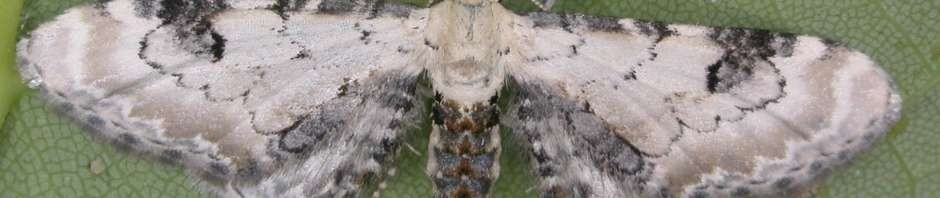
Late July, Early August with migrants.

This is the first year since I got back to mothing when migrants have been a significant feature though it can sometimes be difficult when local species become abundant to decide if they are also immigrant boosted. A point in case is Cnephasia pumicana and C. longana which I am convinced are significantly immigrant boosted at the same time as the underwing invasion that occurs here on the coast. However; my last post was just before a spell of poor weather in the latter part of July. The weather improved though with a full moon and clear skies initially. I have been running my traps at home in Hollesley fairly regularly since 31st July and though also busy in the house managed to get out to Snape on 8th where I thought I saw the potential for some salt-marsh species to drift onto the site I trap. However I have more of these at home that in the Snape catch. Catches have given species counts between 100 and 200 and the 8th was a landmark in that it was the first catch for a very long time without a Clouded Silver. Mostly fairly regular species for my site. Yponomeuta plumbella has been common recently with normally only an occasional one. Not seen any Monopis monachella this year and Buff Footman has been in short supply. Had a few additions to the site list: a beautiful Clouded Magpie on 5th and a Garden Dart on 8th plus some of the migrant species.

Migrants have featured the Small Mottled Willow with around 6 on average for every catch, a few Bordered Straw, Plutella xylostella, Udea ferrugalis, Silver Y and Nomophila noctuella though the latter reached 23 on 9th and a Gem on 8th. More exiting migrants have been a couple of Four-spotted Footman 4th and 5th and the Dotted Footman 4th and at Snape on 8th. I am a little suspicious that the Dotted Footman could be resident at some of our coastal wetlands. Similarly Oncocera semirubella, Ostrinia nubilalis and Sitochroa palealis that have been turning up may also be resident at present. Amongst all of these an extra special moth turned up on 2nd August. It was potted as ‘rather like but not Euzophera pinguis‘. It took me a while to identify the moth and dissection was carried out that placed it as a Sciota species. Images on Lepiforum and the Dissection web sites identified it as Sciota rhenella, a first for this part of the UK I believe. It was a female without eggs so I am sneakily hoping it may have laid on my Aspen prior to capture. It would be wonderful for them to turn up next year!

Posted in Sightings | Comments Off

SMG Event 8/8/2015 – Oulton Marshes (in the end Beccles Marsh).

As can be seen from the title of this post, trapping did not take place at Oulton Marshes as a new locked gate blocked our access to the site and with no key that was it, a change of plan required so we headed instead to Beccles Marsh. Felt cool on arrival, and with a clear sky it didn’t appear that it would be a good night. Still, we gave it a go and 12 traps (4 actinic) were deployed along the river wall and slightly inland. My wine ropes went out too.
Moths were slow to trickle in to the sheet lamp so we were soon up and about checking the traps and ropes to keep warm. Only moth seen on the wine ropes all night was a single Herald. The traps along the river had small numbers of moths in that did include the 2 specialities of this site, Balsam carpet and Double kidney. The inland trap performed much better with it being slightly warmer there, was swarming with moths (lots of Flame shoulder and other common species mainly) but on the top was an example of the migrant tortrix Cydia amplana, the first for the year for all present. There were also a few Hornets and wasps present at some of the lights, a trend that I’ve noticed at my home site also in the last week.
Packed up at around 1.30am with numbers of moths coming in dropping off. 129sp recorded on my list so not a bad total given the conditions. Other notable species seen included: Crescent, Double lobed, Slender pug, Gold spot, Evergestis pallidata, Reed dagger, Platytes alpinella, Chevron, Bulrush wainscot, Webb’s wainscot, Brown-veined wainscot and Olive. Every trap had at least 1 Double kidney in, with probably around 20 seen in total. Balsam carpet count about 5.

Neil

Posted in Events, Field meetings, Sightings | Comments Off

Rare Footman march to the Hall

Two macro-moth additions were made to my Bawdsey list on the night of 3 August. I took examples of Small Dotted Footman (which I believe is new to Suffolk) and Speckled Footman of the continental ssp. arenaria.

Only a few days before I had bemoaning the lack of rare footman this year. Ordinarily I take Dotted, Pigmy or Four-spotted during July.

These latest footman take my Bawdsey footman list to an impressive 15 species: Rosy, Red-necked, Four-dotted, Dotted, Small Dotted, Orange, Dingy, Pigmy, Scarce, Buff, Common, Four-spotted, Speckled, Round-winged Muslin and Crimson Speckled.

With Muslin Footman and Hoary Footman both expanding their respective ranges these can be expected in the future. Conversely Dew Moth seems to have retracted it’s range so would seem unlikely. Feathered Footman is a fantasy!

Posted in Sightings | Comments Off

Moth of the moment.

The White-mantled wainscot certainly seems to be ‘moth of the moment’. I ran 2 traps on Sunday night (2nd Aug) beside the main reedbed area on the golf course, the known site for a colony of the moth. Pleased to find three of that species the following morning, so the colony is still extant. In fact this is my highest night count of this moth here, I normally only get one, rarely two. Very few other wainscots noted strangely, only singles of Fen, Smoky and Webb’s. Not pleased to find the transparent collar plus the cone knocked off one of the traps, presumably by a mammal trying to get at the contents inside. Light still running so some moths caught despite this.

Neil

IGC White-mantled wainscot

IGC White-mantled wainscot

Posted in Sightings | Comments Off

Fears Unfounded

I expressed my concerns at the SMG venue last Friday evening that the only known site for White-mantled Wainscot in Norfolk just across the river to Carlton Marshes, had been lost due to much of the site having been flailed by the site owner back in June. So I ran the lights there last night with not much confidence that one would turn up. Almost the first moth to come to the sheet trap (well before full darkness) was a White-mantled. So it continues to exist in Norfolk for this year at least.

White-mantled Wainscot.

Brian


Posted in Sightings | 2 Comments

Conundrum.

Thought I’d stick an image of this moth up, one that has got me head scratching at the moment. Caught last night in the garden, about the size of a lacunana. Colour is the same both sides of the moth.

Any ideas?

Neil

Unknown tortrix moth.

Unknown tortrix moth.

Posted in Identification Requests | 3 Comments

SMG meeting Carlton marshes SWT reserve 31/07/2015 – successful quest.

Clear skies, a full (blue) moon and coolish temperatures are not the best conditions to go looking for moths, especially at a marshland site but a few people were keen to get out and about after a week of dismal night-time weather. 6 of us met up and put out 3 mv traps along the track to the small broad, as well as 6 traps (2 actinic) along the track to the river. Habitat looked good along there for the target moth for the evening, the White-mantled wainscot, a species that has eluded us at this site for many years. With it now present at nearby sites, we were hoping it would show up. I put out some wine ropes as well for the first time this year. The evening started well with the discovery of some Valerian pug larvae on the flowering Valerian plants along the main track.
Stewart Wright, a visiting Norfolk moth-er had a look round the site whilst we were setting up and noted around 30sp of leaf mines and dusk flying species.
Once dark, moths were slow to trickle in (not surprisingly) so we decided to have a check round the traps and wine ropes. A look at the traps towards the broad revealed very little of note, but the wine ropes were working with a number of Herald moths on them. Once back on the main track heading towards the river, I noticed a small dainty looking wainscot moth fluttering along the edge of the reeds in my torch beam. No-one had a net so it took a small anxious amount of time to secure. A quick check of the still fluttering moth revealed a slender body, a good feature of White-mantled. Once settled it was confirmed as a pristine specimen, target for the night achieved! In fact that was the only one we got, so we were very lucky really that I spotted it.
A check of the other traps along the track revealed more moths, seemed to be performing better than the others, perhaps because of the more varied vegetation.
We called it a night about 1.30am with not much else coming in. Highlights from the c.120sp noted included: 7sp of wainscot including Small, Striped, Webb’s and Bulrush, Small rufous, Small dotted buff, Crescent (good number), Double lobed (a few), Lesser cream wave, Kent black arches, Garden tiger (4), Reed dagger, Phtheochroa inopiana, Acleris aspersana, Acleris shepherdana, Old lady (several on wine ropes, first for year), Gothic (on wine rope) and Agonopterix angelicella.
So even with what could have been deemed poor conditions we actually had a pretty good and successful evening. I think this year with how the weather has been you just have to go for it, summer is always too short and will be over before you know it.

Neil

Small wainscot

Small wainscot

Posted in Events, Field meetings, Sightings | 1 Comment

Moth naming

For blog posts can posters please stick to English names for macros and scientific names for micros. This seems to be the most common practice in use. If you do want to use English names for micros then please supply also supply the scientific.

Thanks, Tony

Posted in Uncategorized | Comments Off

Night of 25th July, Aldeburgh – Nothing ventured, nothing gained!

A few of the Suffolk group decided to get out and about last night, even though the forecast wasn’t great with cool conditions predicted after a partly wet day. The marshes and coastal habitats of Aldeburgh was the venue and it was hoped that a few of the local specialites would be out and about. 6 traps deployed covering the coastal grassland as well as the track leading across the marshes. Moths were predictably slow in coming in but still a reasonable number were about despite the conditions. We were successful in seeing some of the good species, best of which was a single White-mantled wainscot, the first of the year. Other notables: Reed dagger, Kent black arches, Euzophera cinerosella, Lesser cream wave, Tawny shears, Dotted fan foot, Dog’s tooth, Saltern ear, Crescent, Pima boisduvaliella, Webb’s wainscot (first for year) and Beautiful hook tip (this moth is definitely on the increase in Suffolk, used to be a real scarcity not that long ago). There was a little bit of migrant activity too with a Scarce bordered straw and a few Silver Y noted.

Neil

White-mantled wainscot

White-mantled wainscot

Scarce bordered straw

Scarce bordered straw


Posted in Sightings | Comments Off

One before the storm

Just a quick note as it looks like the weather will stop trapping for a while. The Mompha are propinquella. The colour of the head and thorax is not a good guide only the patterning in the terminal quarter works. Picked up two Tineidae (part) new for my site on 21st too. A Nemapogon ruricolella which is rather small and a Haplotinea insectella. This one is much the size of the Nemapogon cloacella (Cork Moth) but the purple sheen on the hindwings is noticeable. Picked up a Scrobipalpa atripliciella new to my home site on 23rd which was relatively clear of underwings. Shall have a rest now the weather has turned for a while.

Posted in Sightings | Comments Off