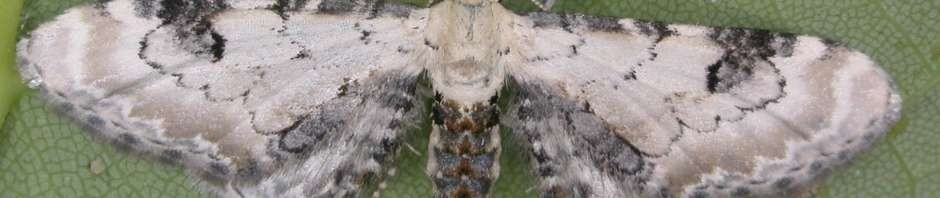
Adrian Parr reports catching a Dotted Chestnut in Barrow a couple of days ago. Is this species going to follow in the footsteps of the Pale Pinion?
Links
Archives
Categories
Search
Adrian Parr reports catching a Dotted Chestnut in Barrow a couple of days ago. Is this species going to follow in the footsteps of the Pale Pinion?
A few moths in the trap this am – despite the breezy conditions. Best were Satellite (2), Early Thorn (1), Early Grey (1), Chestnut (1) and monodactyla (2)
Picture attached (hopefully) of possible mucronella from t’other night. Thoughts anyone?
Tempted out by last nights milder weather I ran the actinic in the garden and an MV at the allotment for c.3 hrs. The latter was a bit of an anti-climax – just a few Cmn Quakers – but the garden faired much better with c20 Cmn Qkr, 6 Hebrew C, DS Pug, Clouded Drab, Twin-spot Qkr and a Grey Shoulder-knot. The pick of the trap however is what looks like an Ypsolopha mucronella. I’ll try and get some pictures at some point in the hope that someone can confirm the i’d but its a bit skittish at the moment.
Hello All
A bumper night for moths last night – 22sp seen. First year records of Red chestnut (2), Y. ustella, C.elongella and Brindled pug (2). Small quaker made up most of the catch with 298 trapped!
Neil
Five Orange underwings seen today at the golf course, including this one at ground level taking in moisture on one of the greens.

Neil
Graham Bull has reported seeing Light Orange Underwing at Wolves Wood yesterday.
Jon Clifton has confirmed that the moth I found indoors, hanging around the bread bin, in Denham on 3rd March, is N. granella (see photo posted on 9th March).
Thanks Jon.
Paul
A better catch in the garden trap last night for me, 14sp, 188 moths. There was a notable increase in the number of Small quaker (this making up a lot of the total number of moths). Notable sightings included:
Small quaker – 128
Common quaker – 29
Twin-spotted quaker – 3 (First for year)
Acleris cristana – 1
Lead-coloured drab – 1
Early grey – 1 (first for year)
Not looking too bad over the coming week for more trapping, nice to find a trap with quite a few moths in again after what has seemed like a long winter.
Neil
I was at the BENHS AGM meeting yesterday and they had a talk on digital microphotography covering the use of focus image stacking. This is basically achieved by taking a series of images where various parts of the picture are in focus. Software then merges the sequence of photos together using the parts from each photograph that are in focus to make up a new image. It’s intended as a solution to the problem of lack of depth of field when doing macro-photography.
The dissection group use the software a lot for improving their slide photos but at this talk they were talking about using it for pinned specimens so I thought I’d have a go with a live specimen. Here are the results of my first attempt. Notice that all of the picture is pretty much in focus (click on picture to see full-size image).

Stacked image of Hebrew Character