Last few nights at IGC.

The last few nights have continued on the same theme as the rest of the week with respectable numbers of moths in the traps here, with counts over 100sp every night. Last night (20th) was the lowest count of 104sp, but it was cooler here despite the cloud with a bit of a breeze. Unfortunately the twin actinic trap in the garden has now started to attract large numbers of Hornets so I won’t be running that trap in the same place again this year. Not very nice to open the trap and dodge those, and not good to find most of the moths dead and partially eaten either. They even killed both the Pine and Privet hawks caught. I’ve also been seeing large numbers of wasps around as well so they could cause problems for us moth trappers later on in the year.
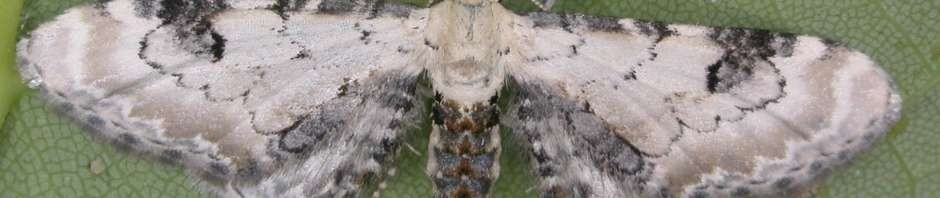
Highlights have included another 2 new site records, both on the night of the 17th in the garden traps – Plain pug and Strophedra weirana. Others have included: Cydia fagiglanda, Lobster, Festoon (still appearing one a night at all sites trapped), Slender pug (first for year), Cydia coniferana ( a few), Maple prominent, Scallop shell, Purple clay (1) and Haworth’s pug (second site record on 20th).
Conditions look very good for more trapping in the coming days, maybe some migrants may start turning up.

Neil

Posted in Sightings | Comments Off

SMG meeting Regrave Fen 19/07/2013.

Target species for this meeting was the Fen square-spot which we have seen at this site in the past but not for a few years now, plus the other nice fen species also found here.
With the warm conditions, this promised to be a good night, and we weren’t disappointed. We placed 7 lights (1 actinic) along the track running between the areas of fen and waited to see what came in. Didn’t take too long for moths to get going and we were soon very busy. All traps recorded lots of moths, and perhaps a few too many midges for comfort!
This turned into an almost all night session, with the traps packed away at around 3.30am. My list at the end of the night stood at 217sp (120 macros), the best count of the year so far for the group. Highlights included: Small rufous, Striped wainscot (lots), Acleris lorquiniana (one of this rare Purple loosestrife feeding tortrix, has been noted here by us in the past), Coronet, Brown scallop, Brachima inornatella, Lesser cream wave (a few), Lesser spotted pinion, Epinotia cruciana, Valerian pug (a few, a known site for this species), Dotted fan-foot, Silky wainscot, Garden tiger (1), Blackneck (2, both at Paul’s actinic trap), Double lobed, Lilac beauty, Dark umber, Mompha propinquella, Fen wainscot and Lempke’s gold spot (a few, again, a known site for this moth). A tortrix moth caught in one of my traps had us scratching our heads for a while – nobody immediately recognized it. Checking Phil Sterling’s micros book was a bit inconclusive, could either have been Ptycholomoides aeriferanus (which didn’t look quite right and also the habitat seemed wrong as it feeds on Larch) or a female Olindia schumacherana (habitat better for this species). Once checked at home and in daylight against photos on the web turned out to be the former species, certainly a moth I’ve not seen before and possibly new for most people present, so that goes down as moth of the night for me. By this comment, you can see that unfortunately we were unsuccessful at recording the target moth on this occasion. Something to try for another year.

Neil

Lempke's gold spot

Ptycholomoides aeriferanus


Posted in Events, Field meetings, Sightings | Comments Off

Bedstraw Hawk at Westleton

Clive Moore reports Bedstraw Hawk-moth at Westleton last night. Timing and current NE winds suggest to me it’s a continental immigrant; coupled with the fact that several Great Brocades have been seen in southern England in recent days.

With continuing NE winds keep a look out for further examples of these two species. There must also be a possibility of Scarce Silver Y coming across too as I have taken this species in similar conditions.

Posted in Sightings | Comments Off

Wormwood

A fresh specimen of Wormwood was a nice surprise in the garden trap this morning. I can’t think of any Artemisia nearby so it must have been a wandering individual.

It has been a great month for filling in some gaps in my site list and on the 17th I added Clouded Brindle and Sharp-angled Carpet. Where are all the yellow underwings?

Posted in Sightings | 1 Comment

Marsh Carpet

It was one of those evenings you dream about, – finding a moth in the catch that is about as unlikely as finding a gold coin in a pocketful of change! But there it was, sitting on virtually the last egg tray in the last trap to be inspected, surrounded by V-moths and Spinach, (thankfully the trap didn’t contain any ‘blunderwings’). My hands were shaking so much as I tried to pot it that it’s a wonder I didn’t lose it.
The rest of the catch on the bank of the river Waveney last night was pretty good too. V-moth (37) – highest number I have ever recorded on the site, Spinach (22), Double Dart (15), Balsam Carpet – second generation (8), Shaded Fan-foot (2) and Brown Scallop were highlights of the macros. Eidophasia messingella, Anania verbascalis, Epinotia cruciana (8), were among the many micros.
Most of these species were expected, although not in these numbers. The Marsh Carpet was a remote possibility because of the presence of Thalictrum on the site, but completely unexpected.
Undoutedly moth of the year for me!

Brian

Posted in Sightings | 2 Comments

SMG Moth Meeting at Orford Ness – 27th July

If you’re thinking of coming along to this event can you let me know by Monday 22nd July, so we can get an idea of numbers wanting to come along.

Also note that the programme had an error in the meeting time for this event. We will be meeting at Orford Quay at 7.30pm on the Saturday.

Tony

Posted in Field meetings | Comments Off

Species count soars to record high at Bawdsey in the heatwave

The night of 16 July was very still and muggy and produced the highest all-time count at Bawdsey of 205 + species. I’ve identified most, but not all, of the micros. One wonders what the actual total would have been if all micros were retained including coleophora and cnephasia which were released. I suspect nearer the 215 species mark.

Lots of wetland and woodland wanderers have appeared in recent nights which has boosted numbers.  Another factor is the season running late the totals include species that I would not normally expect so late in the season.  I’m still catching Rustic Shoulder-knot and White Ermine for example. 

Highlights on 16th included Teleiodes vulgella, Brachmia blandella, Crescent Plume, Hedya salicella, Epiblema foenella, Beautiful China Mark, Scoparia subfusca, Sciota adelphella, Large Emerald (second ever Bawdsey record), Lesser Cream Wave, Dingy Shell, Bordered Pug, Plain Pug, Common Lutestring, Garden Tiger (eight), Ghost, White Satin, Brown-tail, Kent Black Arches, Coronet, Silky Wainscot, Maple Prominent and Dotted Fan-foot.

23 Hawk-moths were trapped as follows: 9 Privet, 5 Elephant, 5 Poplar, 3 Pine and 1 Eyed.

Numbers dropped by 25 – 30 species last night (17th) with a slight breeze. However, the breeze was what was needed to bring a rare immigrant in and boy was it a good one! A pristine Beautiful Marbled was in the ‘Three-humped Trap’ – where the tritophus was taken last August.   A photo of the moth is on the ‘Atropos’ website, I haven’t worked out how to add one here yet.   I believe this to be the fifth Suffolk record following singletons at Bawdsey Manor and Dunwich Heath in 2006 and Landguard and Leiston in 2012).  It’s interesting that it’s more regular than parva here in Suffolk (Bawdsey, 2012 and Woolpit, 2013) which bucks the national trend.  Only one ostrina has made it to our county so far (Minsmere, 2012).    

Species recorded last night (but not on the record night of 16th) included Anania verbascalis, Rosy Wave (a high count of 5) drifting up from the saltmarsh; Mullein Wave, Maiden’s Blush, Small Elephant Hawk, Clouded Brindle, Water Ermine, Marbled White-spot, Broad-barred White and Shaded Fan-foot.

Posted in Sightings | Comments Off

July, first half, Hollesley.

A few species new to my site list including a particularly rare Coleophora. Total species numbers for me have been OK with the lowest at 70 0n 1st and with 107, 116 and 119 on 3rd, 14th and 13th respectively. Hawk-moths have been abundant this year with the Elephant Hawk-moth being a bit of a problem buzzing around the traps and disturbing the other moths. Pine Hawk-moths have been in short supply though with only 4 to date. Large Yellow Underwing is thankfully less common than last year and have been catching a number of Lunar YU but no lesser or Lesser Broad-bordered yet. Ephestia parasitella has been noticeably common this year as too has the Sycamore. One Red-necked Footman so far.

New to my list: Broom, Striped Wainscot, Round-winged Muslin, Tawny Wave, Ovendenia lienigianus (Mugwort Plume, a nice catch), Epinotia nanana, Zeiraphera griseana, Dicrorampha flavidorsana, Chionodes distinctella, Argyresthia trifasciata, Coleophora gryphipennella, C adspersella and C mayrella.

The rarity is Coleophora adjectella. This was captured on 7th July. It is one of a group of similar small (for Coleophora) ochreous species that at rest hold their wings flat showing a triangular outline. They require dissection for identification which is unfortunate when one discovers a rarity. My specimen appeared close to the image of C badiipennella on UKMoths with a slightly deeper ochre distally and more cream at the head end.

Posted in Sightings | 1 Comment

This week, I’ve mostly been catching Dark Arches…

… and lots more besides. Spells of warm weather, of the likes we are having at present, offer the best opportunity for picking up new species in the garden and my trusty actinic hasn’t let me down. Having trapped every night since Saturday, I’ve so far recorded about 120 species. Of interest, I had 9 Swallow-tail Moths on 13th, 4 Orange Moth on 14th (still a scarce species here having only been recorded in 2006, 2010 and last year), a Cinnabar (the third garden record), Catoptria pinella (been getting 1 or 2 a year since 2008), Short-cloaked Moth (1 on 13th) and Barred Straw (every night so far with 3 on 15th). The highlight was going to be the Vitula biviella I caught on the 13th but that got trumped this morning when I turned over one of the egg-trays and found a Ruddy Carpet. Had I also managed to pot up the probable Beautiful Carpet that was fluttering around the trap on Saturday night it might have been a bit tighter to call but, alas, the albicillata will have to remain a maybe. Still .. I can’t complain :-)

(As a postscript to the above, I ran the trap again that night and caught a single Blue-bordered Carpet. Another new site record and one of the few species I had caught at our old home in Thurston but not here.)

Ruddy Carpet


Vitula biviella


Posted in Sightings | Comments Off

Things hotting up at IGC with over a 100sp recorded at last.

In the last week moth numbers have really taken off at the site in the warm conditions. I’ve run traps in the garden, at the work sheds and also on a piece of heath on the site. The garden produced c.90sp from a 125w MV plus the twin actinic, whilst the last 2 nights I’ve recorded around 134sp both times in 2 125w MV’s. Yesterday there were more moths trapped when I ran them around the worksheds, today there were less moths but a slightly different variety given the different habitat.
Here are a few of my interesting observations. First, 2 new micros were recorded at the woodland site: Ethmia dodecea and Yarrow plume G.pallidactyla. Can’t remember the last time I saw 2 new species in one night’s trapping here, was a long time ago! Festoon, Shaded fan foot (both regular in low numbers), Schreckensteinia festaliella (in garden), Kent black arches (one so far), L-Album wainscot (1), Archips xylosteana (common, with a high count of c.300 at the wood site), Alemmia loeflingana (again very common, with high count of c.750 at the wood site), C. culmella (again now common with c.200 at the wood site), Totrix viridana (starting to go over a bit but still c.130 at the wood site), Blotched emerald (regular in low numbers), Orange footman ( a late one on 15th), Purple clay, Scalloped oak (first ones for year), Vitula biviella (1), Capperia britanniodactyla (3 so far), Common swift (still on the wing, think this is late for me), A. bistriatella (1), Dun bar (first records for year, ), Plain wave (c.25 seen on the heath, a good count), Leopard, Grass emerald, Blue-bordered carpet, Agdistis bennetii, O. nubilalis and Ling pug. What I’ve noticed about a lot of the moths I have been catching is they have mainly been very fresh, showing that they have only just emerged at this site in the recent warm weather. Have they been waiting for it, I wonder? Certainly the number of butterflies I’m seeing around the site has increased dramatically in the last week. Let us hope that this good spell of weather allows the struggling populations of our lepidoptera to recover from last years disaster season.

Neil

Posted in Sightings | Comments Off